Why Japan uses the term “fusion energy”: Takaichi and the history of the 2023 national strategy
Sanae Takaichi, then minister responsible for science and technology policy, was involved in adopting the English-derived term “fusion energy” in Japan's national strategy. Government documents from 2023 cite usage in Britain and the United States, the different principles of fusion and fission, and communication at home and abroad. This was not a wholesale renaming of the scientific term “nuclear fusion,” but reflected a policy emphasis on industrialization alongside R&D.
Read the Japanese original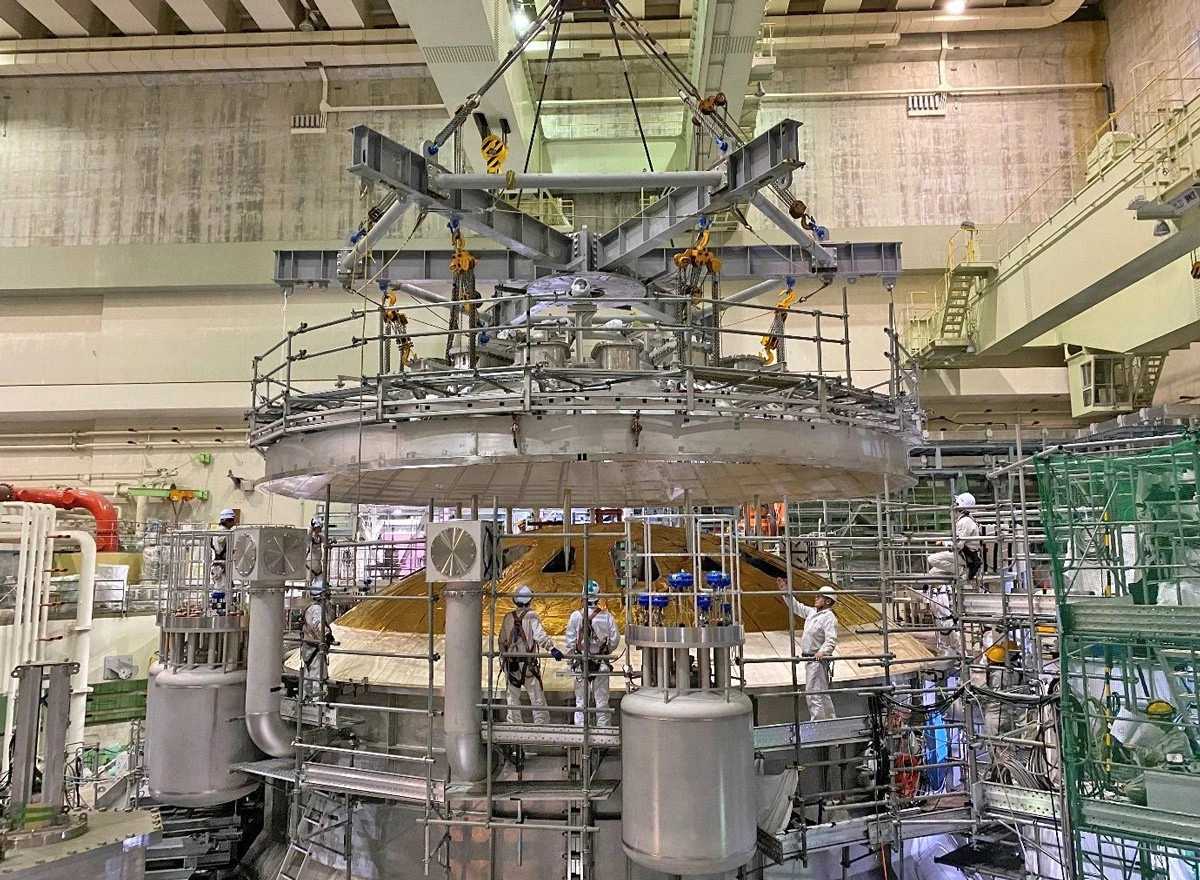
The reason for the wording appears in a March 2023 press conference
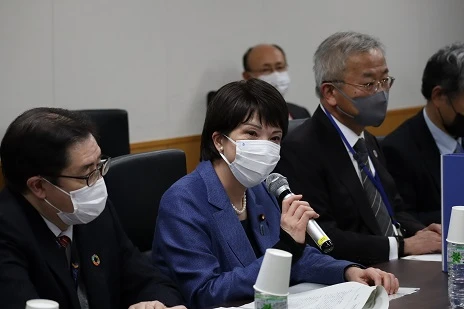
At her March 3, 2023 press conference, Takaichi explained the draft national fusion strategy. Referring to the use of “fusion” overseas, she said the expression had been adopted in the strategy to communicate Japan's first national fusion strategy domestically and internationally. Her qualification that it applied “in this strategy” is important.
At the same conference, she discussed not only energy security but the potential for related technologies in medicine, the oceans and space. The title “Innovation Strategy” expressed an intention to develop both research toward electricity generation and the industries emerging around it. Cabinet Office: March 3, 2023 press conference
The official title adopted on April 14 that year was “Fusion Energy Innovation Strategy.” It was adopted by the fifteenth meeting of the Integrated Innovation Strategy Promotion Council; describing this strategy itself as a Cabinet decision would be inaccurate. At her press conference that day, Takaichi said she had attended every meeting examining the strategy. She was then the minister responsible for science and technology policy. Cabinet Office: April 14, 2023 press conference
How “nuclear fusion power generation” relates to “fusion energy”
The 2023 strategy explains that fusion, which joins light atomic nuclei, differs in principle from fission, which splits heavy nuclei. It also notes that Britain and the United States use “fusion” in the energy field for what is called “nuclear fusion” scientifically. It states that, while carefully addressing confusion with fission, the strategy uses the English-derived expression “fusion energy” for nuclear fusion energy. 2023 strategy, main text p. 2
Rather than interpreting this as a universal change to the official name of nuclear fusion power generation, it is more accurate to see it as naming energy based on the same physical phenomenon in language aligned with international policy and industry. It helps to distinguish nuclear fusion as the reaction, fusion energy as the energy it produces, and fusion power generation as a way of converting that energy into electricity.
The terminology serves to explain the difference from fission carefully and communicate policy in language shared internationally. This combines scientific explanation with international communication. When choosing terms, describing the reaction and the way its energy is used helps understanding.
The headline photograph shows JT-60SA assembly work in 2020, before the national strategy was formulated. The strategy is easier to place in context as an industrialization initiative added to accumulated R&D, including Japanese–European research cooperation. F4E's announcement of JT-60SA assembly completion
Takaichi's involvement was part of broadening research into industry
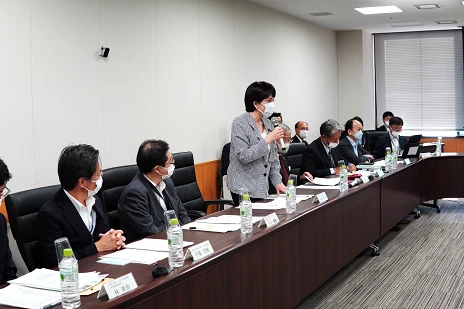
Work on the national strategy did not suddenly begin in spring 2023. At a September 13, 2022 press conference, Takaichi reported that an expert panel to examine fusion strategy had been established the previous day. The plan was to consider both R&D and industrial development and compile a strategy the following spring, against a background of stronger policies in major countries and growing private investment. Cabinet Office: September 13, 2022 press conference
Discussions progressed from the first meeting on September 30, 2022 to the fifth on February 28, 2023. The official record of the fifth meeting confirms that Takaichi emphasized industrialization through public–private cooperation and thanked the experts who had prepared the draft. Her policy involvement is clear, but the strategy must also be understood as a document produced through expert discussion and government decision-making procedures. First meeting record, fifth meeting record
In 2024, an industry council and work on safety
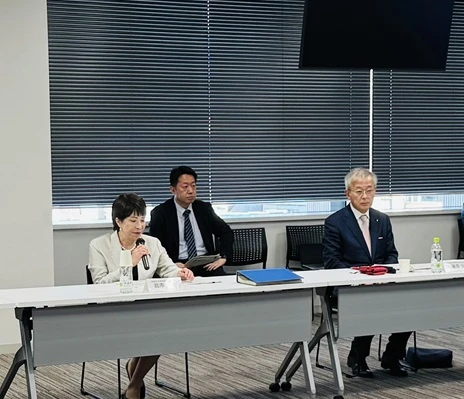
Developments after the strategy also show the widening focus on industrialization. At the sixth meeting on March 29, 2024, the establishment of the industry council J-Fusion was reported, and a task force was approved to examine basic principles for ensuring safety. Corporate participation and institutional preparation were beginning to advance alongside R&D. Sixth meeting record
The 2025 revision and steps toward deployment in 2026
In July 2024, Takaichi announced that discussions on revising the national strategy would begin that August. Topics included a pathway toward electricity-generation demonstration in the 2030s, technology development, standardization, supply chains and safety. Cabinet Office: July 19, 2024 press conference
The strategy was subsequently revised on June 4, 2025. The revised version targets electricity-generation demonstration in the 2030s ahead of the rest of the world and lays out an intention to establish the foundations of related industries. It also retains the use of “fusion energy” for nuclear fusion energy. The 2030s are a policy target, not a guaranteed date for commercial electricity generation. 2025 revised strategy, main text pp. 2 and 5
On April 8, 2026, the government adopted a document on approaches toward the societal deployment of fusion energy. It identifies challenges including competitive generation costs, implementing entities, siting, personnel and finance, safety regulation and management of activated materials. A public–private investment roadmap followed in July. Reading the Cabinet Office's material available as of October 16, 2026 makes it possible to distinguish the strategy revision from the subsequent specification of implementation policies and steps. Cabinet Office strategy-related material, approaches toward societal deployment
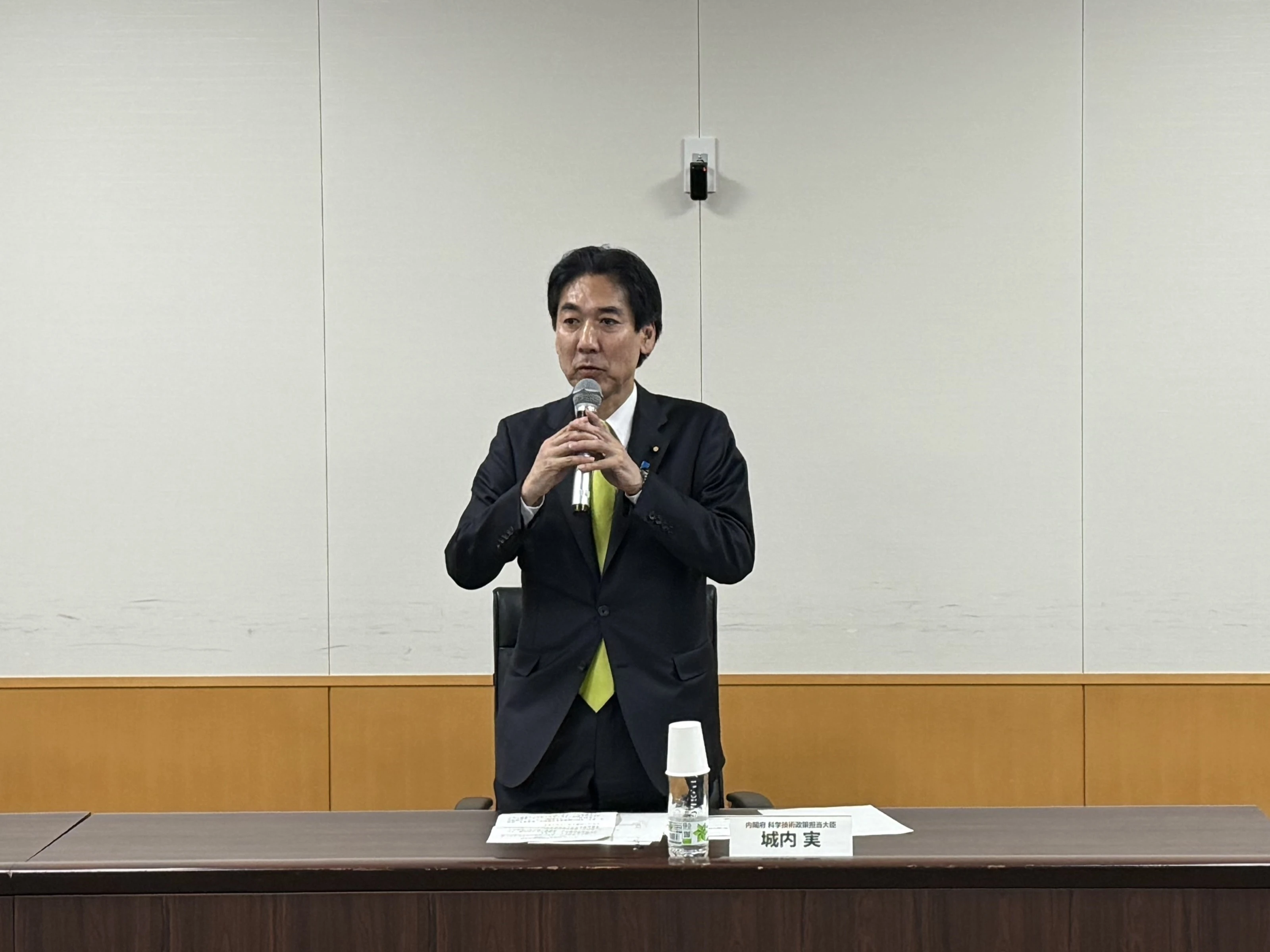
A name still needs a technical explanation
A change in terminology does not remove the work needed to ensure safety. The basic safety principles adopted in March 2025 address tritium confinement, radiation protection, neutron effects on materials and management of activated equipment. The fact that fusion differs in principle from fission should be explained alongside the need for measures addressing radioactive substances and radiation. Basic safety principles, main text pp. 2 and 8
When reading company announcements or policy documents, first identify whether the subject is research into reactions, equipment development or electricity-generation demonstration. Looking at what is required of materials and equipment suppliers, as well as companies building power plants, makes “industrialization” more concrete.
In 2023, while Takaichi was the responsible minister, Japan's national strategy adopted the expression “fusion energy.” Behind this English-derived name lies the policy challenge of developing fusion into energy usable by society and building an industry along the way. Progress should be measured not just by a new name but by how concretely demonstrations, supply chains and safety arrangements develop.
- Cabinet Office: March 3, 2023 press conference (checked October 16, 2026)
- Cabinet Office: April 14, 2023 press conference (checked October 16, 2026)
- 2023 strategy, main text p. 2 (checked October 16, 2026)
- F4E: announcement of JT-60SA assembly completion (checked October 16, 2026)
- Cabinet Office: September 13, 2022 press conference (checked October 16, 2026)
- First meeting record (checked October 16, 2026)
- Fifth meeting record (checked October 16, 2026)
- Sixth meeting record (checked October 16, 2026)
- Cabinet Office: July 19, 2024 press conference (checked October 16, 2026)
- 2025 revised strategy, main text pp. 2 and 5 (checked October 16, 2026)
- Cabinet Office: strategy-related material (checked October 16, 2026)
- Approaches toward societal deployment (checked October 16, 2026)
- Basic safety principles, main text pp. 2 and 8 (checked October 16, 2026)
Information checked as of:2026-10-16
Policy history and terminology explainer based on official press conferences, meeting records and strategies from 2022–2026. Historical events are not presented as new announcements, and policy targets are distinguished from achievements. Terminology explanations and reader-oriented analysis are editorial. Photographs record the dates stated in their captions.