W7-X sends its heating beams over 60 metres
Copper mirrors carry 140 GHz microwaves to W7-X. Increasing the beam power also changes the cooling and protection needed along the route.
Read the Japanese original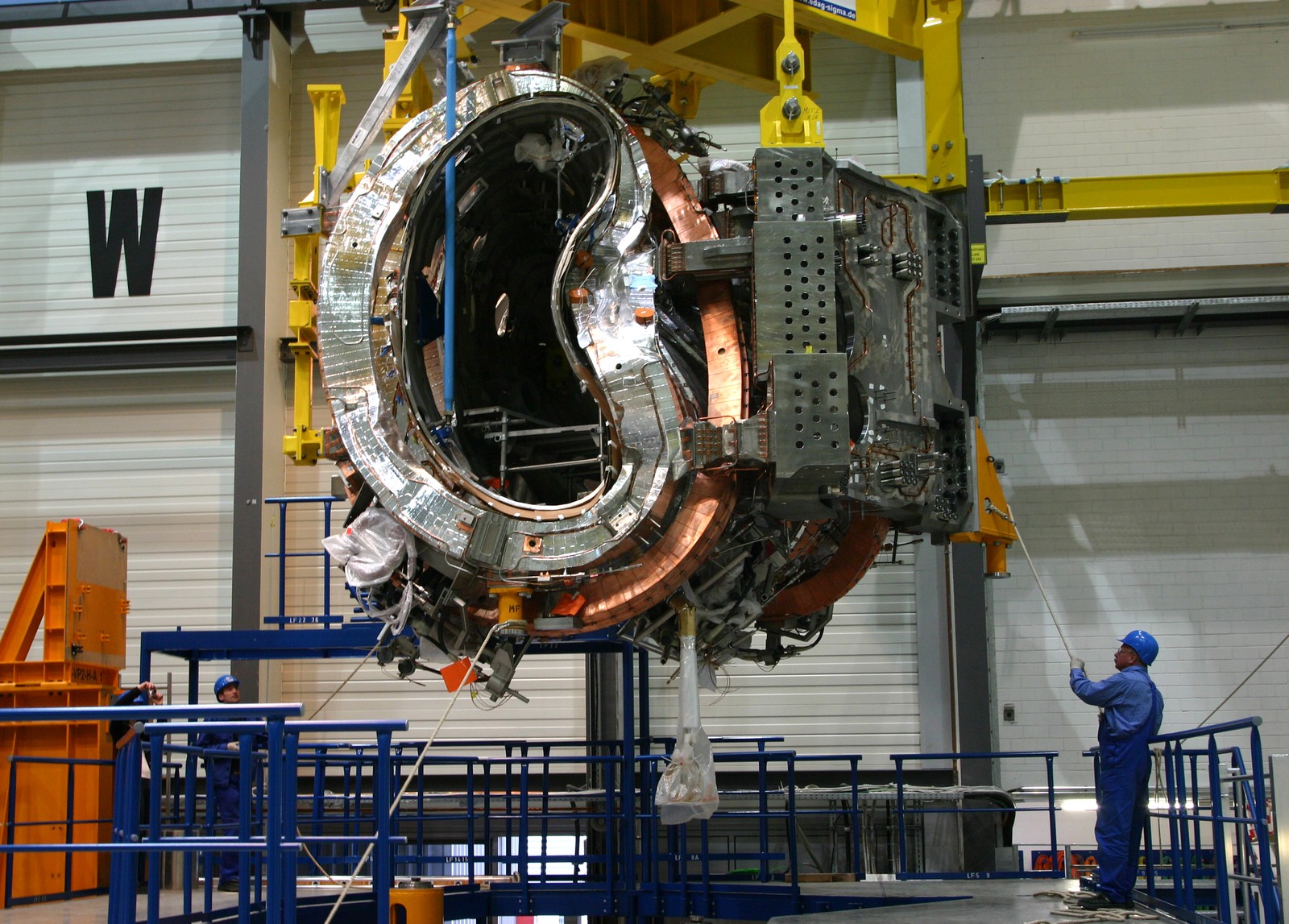
The source that heats a fusion plasma can sit roughly 60 metres away. At Germany’s W7-X, copper mirrors guide powerful microwaves to the plasma. Raising the power puts new demands on the route itself, including cooling and the detection of electrical arcs.
Where 140 gigahertz goes
Electron cyclotron resonance heating, ECRH, is W7-X’s main heating method. A gyrotron generates microwaves that transfer energy to plasma electrons. IPP’s technical overview specifies 140 GHz, a wavelength of about 2 millimetres, for a magnetic field of 2.5 tesla. This is the second harmonic of the electron cyclotron frequency. The frequency and magnetic field must be matched.
A heating beam travelling through air
Instead of relying solely on a metal waveguide, W7-X uses quasi-optical transmission: a sequence of mirrors shapes and directs beams through space. IPP describes an approximately 60-metre route using copper mirrors. Low losses in air allow the gyrotrons to stand away from the torus building, while the mirrors themselves require cooling for sustained high power.
In a 2024 presentation by the responsible team, a reflector placed before the torus window sent the beam back along the transmission line. Several one-minute high-power pulses were demonstrated over a 120-metre round trip with 31 mirrors. That test distance is distinct from the one-way route to the plasma.
Higher power changes the transmission system
IPP’s 27 July 2026 description of HiPMiB sets a development target of 2 MW per beam. IPP, KIT, the University of Stuttgart’s IGVP and Thales are developing the source and transmission technology together. The target must not be treated as an already commissioned operating capability.
The announcement reports overheating components and damaged vacuum-valve seals during earlier pulses longer than five minutes. Work includes adjusting mirror focal lengths to widen the beams, cooling with dry cold air, and rapidly detecting atmospheric arcing. Doubling the power therefore reaches well beyond replacing the source.
One system from source to vessel
Power generated by a gyrotron and heating power delivered to the plasma are different quantities. Beam shaping, mirror alignment and transmission to the entrance window all affect operation.
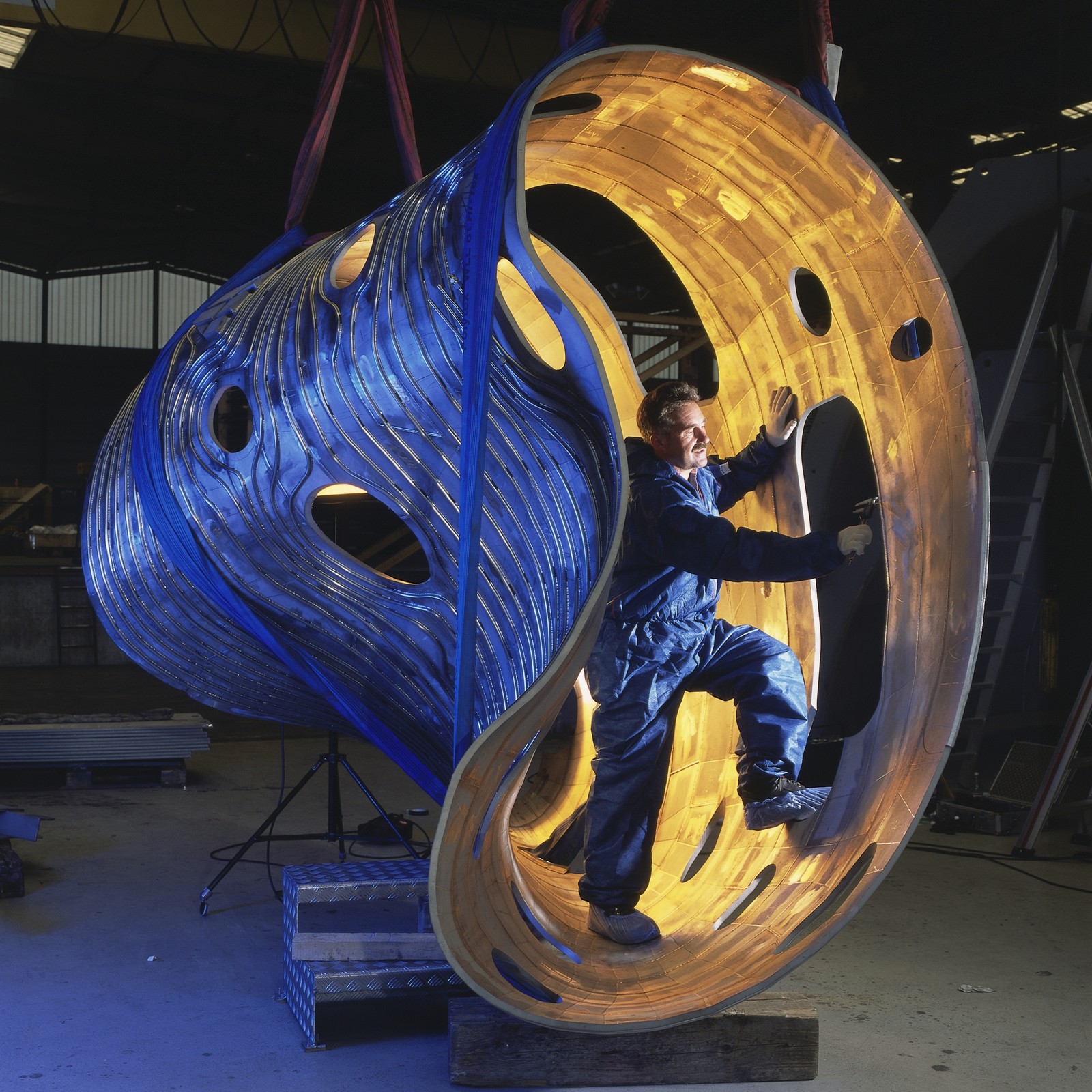
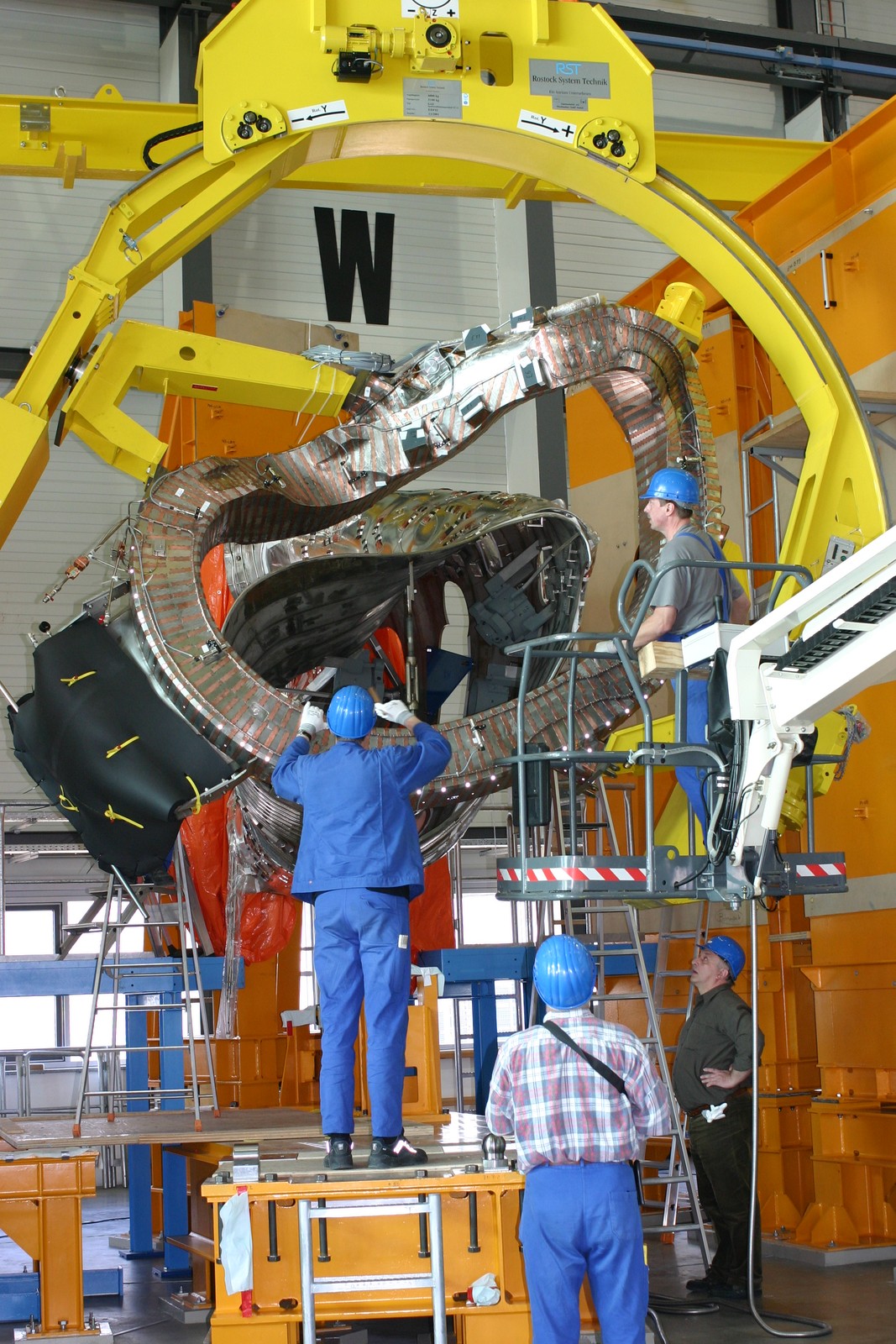
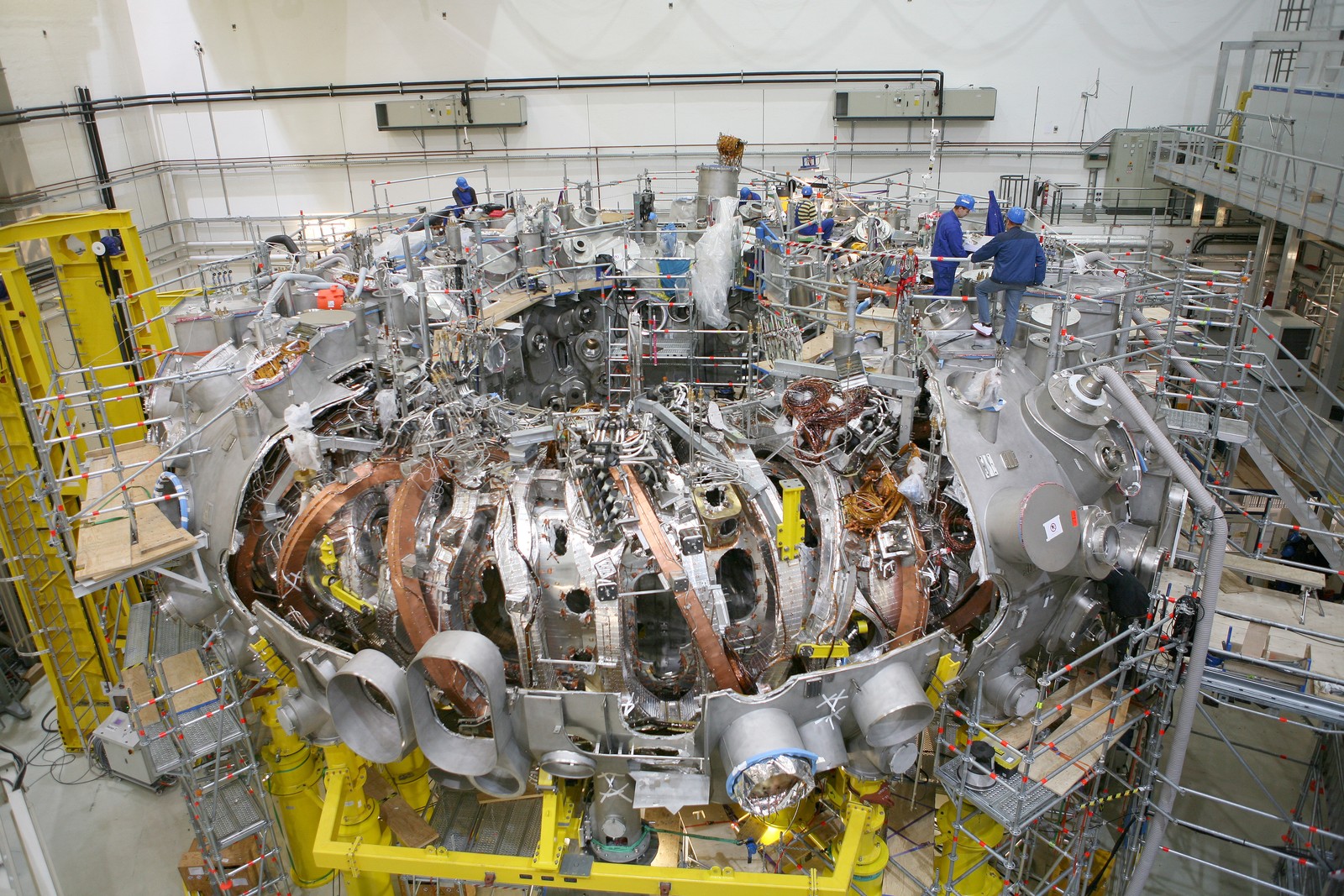
FI’s interpretation is that the route creates manufacturing, alignment and inspection tasks of its own. Mirrors, cooling, vacuum interfaces and arc detection must work with the source. The photographs show W7-X vessel and coil assembly; they do not depict the microwave transmission line or new HiPMiB components.
- IPP Microwave heating ECRH
- Stangeほか The quasi-optical ECRH system of Wendelstein 7-X 2024
- IPP HiPMiB計画 2026年7月27日
Information checked as of:2026-11-26
IPP技術解説、2024年担当チーム発表、2026年7月HiPMiB計画を区別。2MWは開発目標、往復120m試験は片道60mと区別。産業面の結びはFIの考察。