Why does heat escape magnetic confinement? Understanding plasma turbulence
A magnetic field is not an impermeable wall against heat. Plasma turbulence, H-mode, and LHD observations explain heat transport and the limits of experiments and calculations, including evaluation conditions instrumentation and software companies should disclose.
Read the Japanese original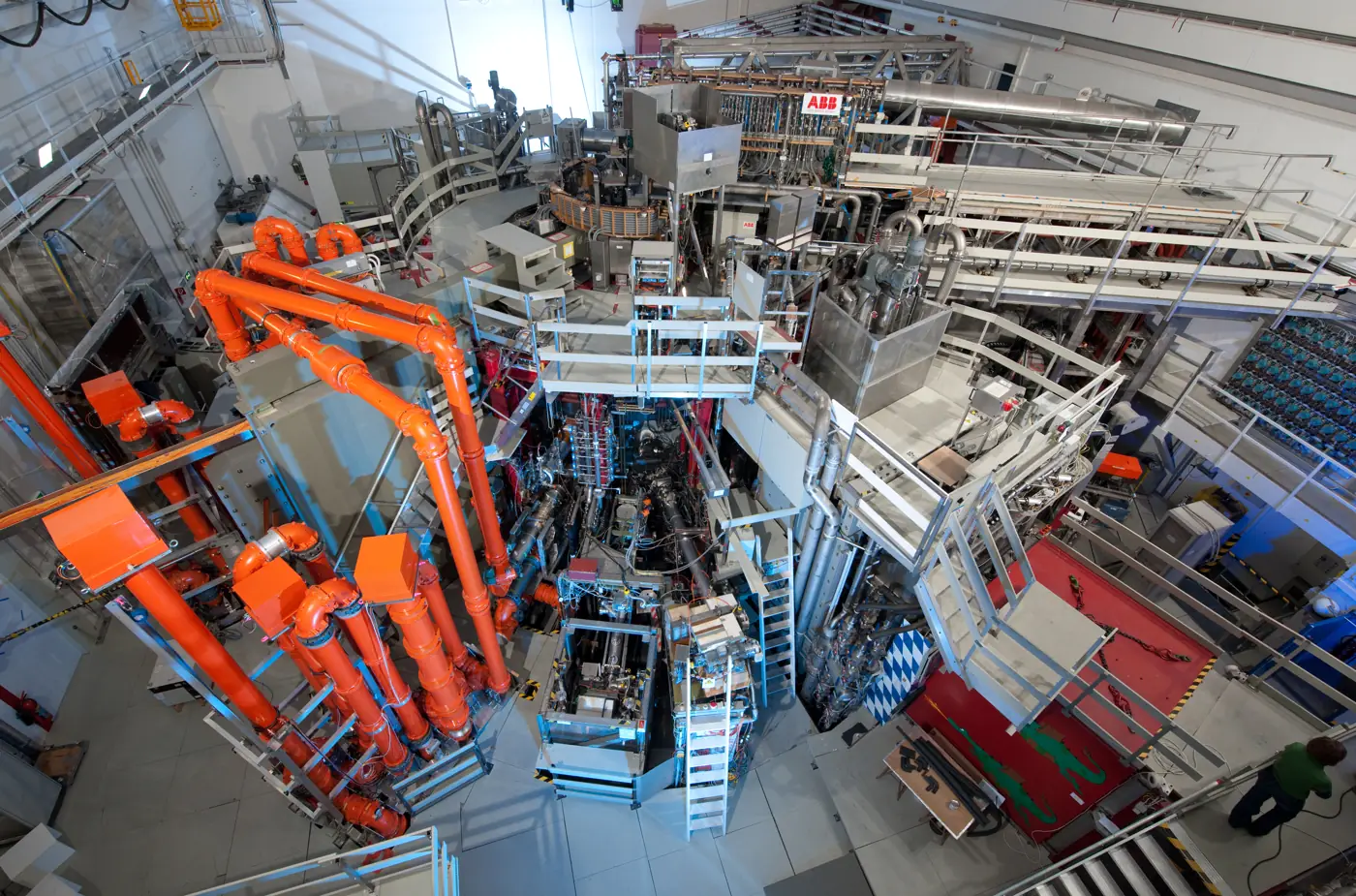
Why does heat escape even when a magnetic field confines the plasma? “Turbulence,” a term often found in fusion research announcements, is one key to this question. Let us examine heat movement inside a plasma through both experiments and calculations—something that magnet strength and peak temperature alone cannot reveal.
This is not breaking news about a new experiment. It is an explanation of confinement, drawing on the discovery of H-mode in 1982, LHD observations in 2025, and simulation research in February 2026.
Summary
- Magnetic fields constrain particle motion, but do not form an impermeable wall against heat.
- Small fluctuations and eddies transport heat and affect the performance of the entire device.
- Connecting measurement, calculation, and control requires separate assessments of whether phenomena look similar and whether their numerical values also agree.
A magnetic field is not a solid wall that stops heat
Plasma is a state in which electrons and ions move around. In a magnetic field, charged particles travel while circling magnetic field lines. Because they can move along those lines, research devices shape the field to keep hot fuel away from the walls. IPP's explanation of magnetic confinement
However, making particles less mobile is not the same as reducing heat movement to zero. In a plasma with spatial differences in temperature or density, fluctuations grow and generate complex flows. The transport of particles and energy by such flows is called “turbulent transport.”
Here, “transport” means heat or particles moving within the plasma, not fuel being carried by truck. Nor does it mean fuel leaking from a broken device. The question is how well heat can be retained while magnetic confinement is functioning.
Small eddies change the performance of a large device
Turbulence is not simply the entire plasma shaking on a large scale. IPP explains that small structures on a millimeter scale can influence the behavior of a plasma measured in meters. Flows of different sizes interact, so the same average temperature does not necessarily mean the same internal state. IPP turbulence research
An intuitive starting point is to consider how quickly dense and sparse regions, or hot and cold regions, mix. However, water eddies cannot be applied directly as an analogy. In a plasma, particle motion is coupled to electromagnetic fields, and multiple instabilities are involved.
That is why a single action—“make the magnets stronger” or “heat it more”—cannot explain the solution. The temperature distribution created by heating also affects how heat escapes. Assessing confinement requires looking not only at temperature, but also at the distributions and fluctuations under which it was maintained.
H-mode changes how the plasma insulates itself
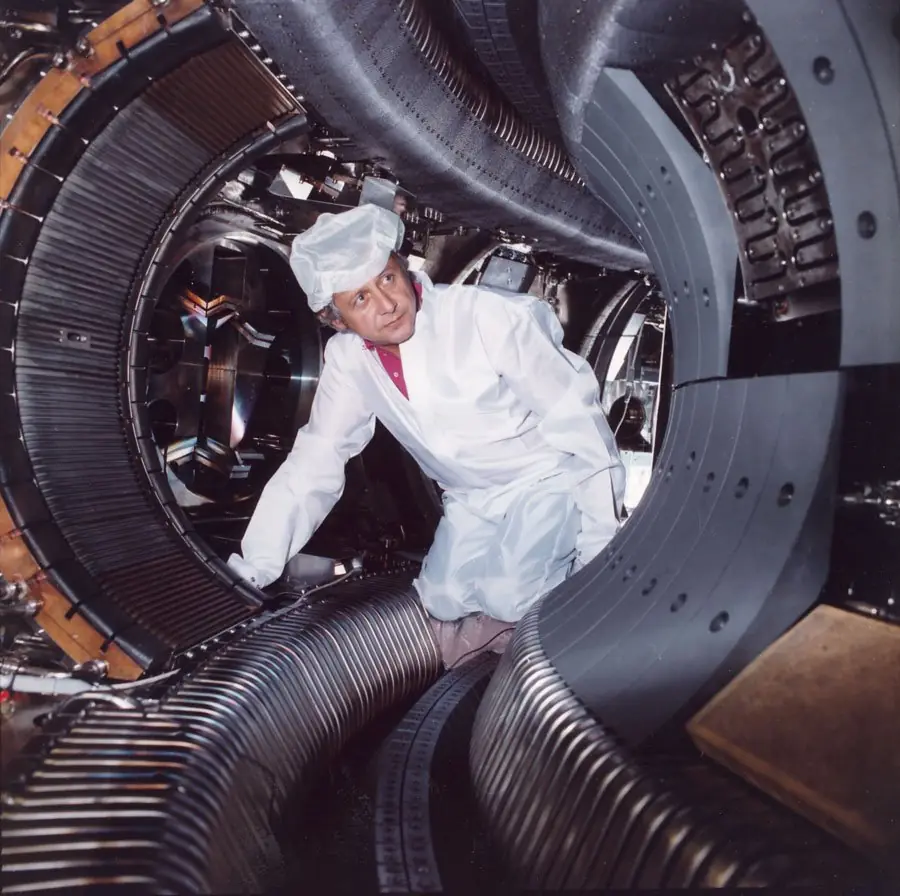
On February 4, 1982, researchers at ASDEX in Germany discovered a state in which a plasma's ability to retain heat suddenly improved. This is the high-confinement mode, or H-mode. The ASDEX where it was discovered and its successor, ASDEX Upgrade, are different devices. IPP's retrospective on the discovery, October 26, 2022
In H-mode, a region that impedes heat flow forms at the plasma edge. This is called a “transport barrier.” Rather than inserting solid insulation, changes in the plasma's own flows and fluctuations suppress heat movement.
Crucially, good confinement alone does not determine operating conditions. Phenomena called ELMs can suddenly expel heat and particles from the edge, requiring research to reconcile confinement with loads on the wall. The ability to retain heat inside and the ability to safely receive heat leaving the plasma must be considered together.
Reproducing a phenomenon computationally does not complete prediction
The GRILLIX research introduced by IPP on February 23, 2026, simulated the transition to an H-mode-like state as heating increased, using conditions based on ASDEX Upgrade. The paper was published on February 19. Research paper abstract
In the calculation, the character of edge turbulence changed abruptly, producing steep temperature and pressure gradients. At the same time, IPP explicitly states that sufficiently satisfactory quantitative agreement with experiment has not yet been achieved. The scope also matters: the core was held fixed and the calculation focused mainly on the edge. IPP research introduction
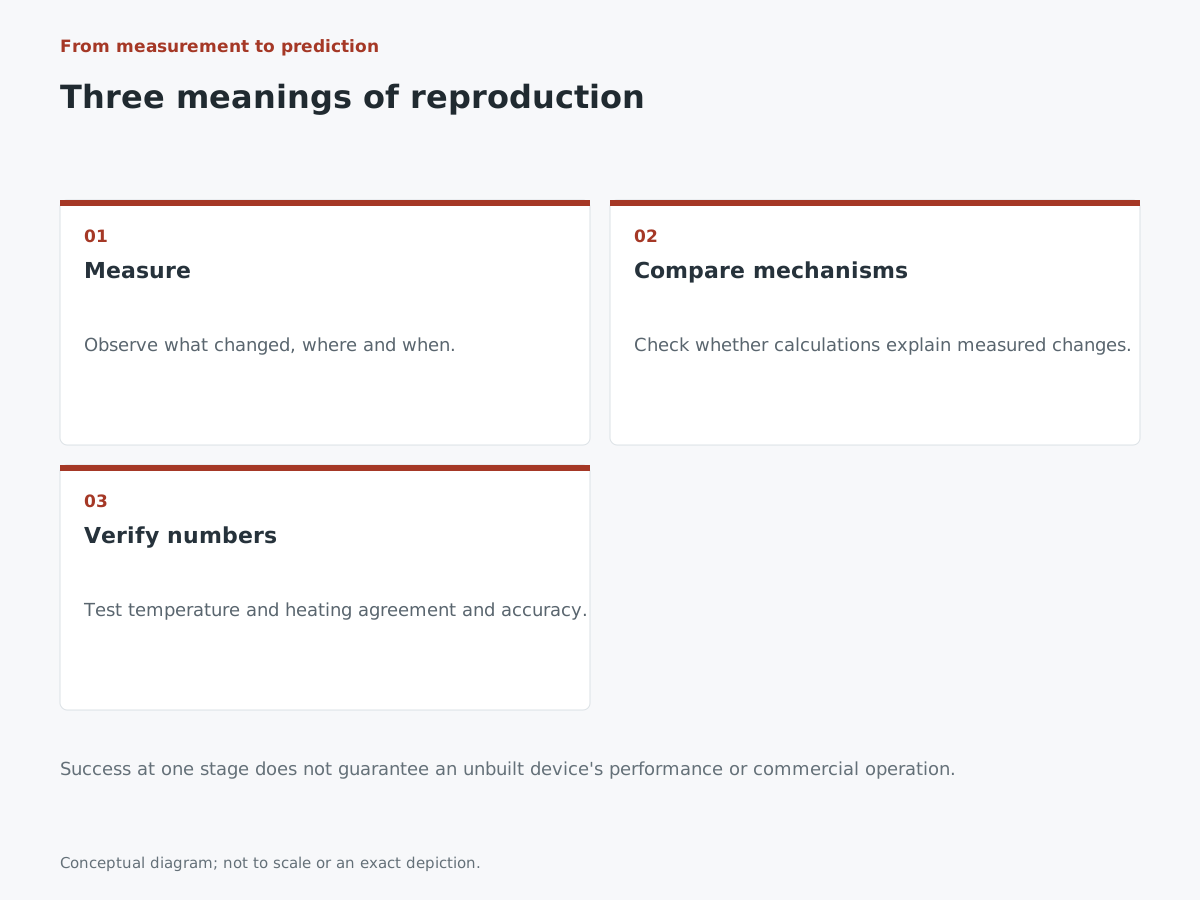
“Qualitative reproduction” means that the features and mechanisms of change correspond. “Quantitative prediction” means correctly estimating numerical values, such as required heating power or temperature, with an assessable degree of accuracy. That gap must be closed to design future devices. It is important to recognize the research advance without reinterpreting it as a finished design tool or a record of commercial-reactor operation.
LHD revealed the complexity of heat movement
On December 10, 2025, Japan's NIFS reported from LHD experiments that turbulence not only transports heat locally but also connects distant regions. The study applied brief heating and examined heat and fluctuation responses at high temporal and spatial resolution. NIFS research announcement
The result shows behavior that cannot be fully captured by a simple picture of heat spreading from one neighboring region to the next in the same way. It does not, however, demonstrate freely controlling turbulence to eliminate heat loss. It is fundamental research aimed at understanding heat propagation and connecting that knowledge to future prediction and control.
Tokamaks and helical devices create magnetic fields differently. The fact that both conduct turbulence research does not mean conditions obtained in one can be transferred directly to the other. Read the device name together with the observation location, heating method, and time interval assessed.
How are tiny fluctuations measured?
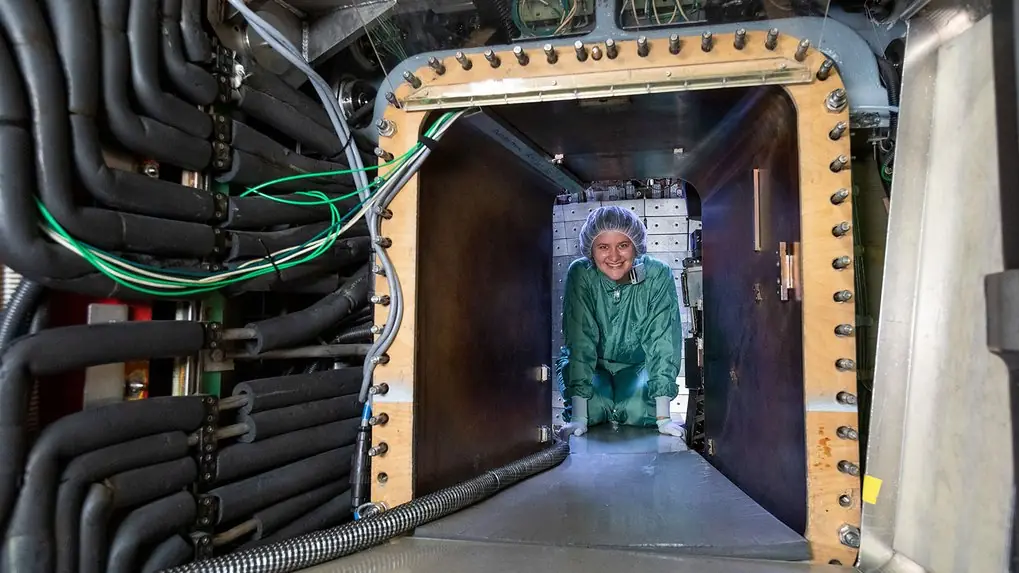
IPP research observes fluctuations using different techniques, including probes, microwaves, lasers, and high-speed cameras. Each method sees different quantities and locations; for example, heat loads limit the conditions under which probes inserted into the edge can be used. An overall photograph of a device alone cannot tell us the scale of turbulence or the heat loss.
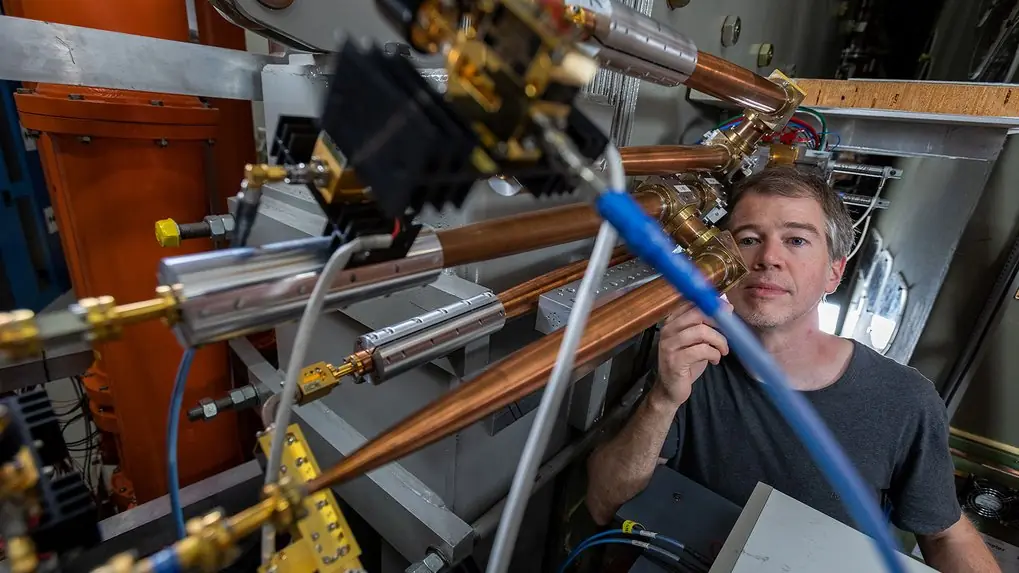
At ASDEX Upgrade, Doppler reflectometry examines the scattering of microwaves injected into the plasma, comparing turbulence measurements with theoretical models. Calibration of the diagnostic system, including movable mirrors inside the vessel, also supports these observations. Research and diagnostics at ASDEX Upgrade
Connecting measurement and calculation to operating decisions
On the computational side, there is also work to balance precision and execution time. On March 17, 2023, NIFS announced research using a simplified model to predict heat transport rapidly, based on large-scale turbulence calculations. This extracts the necessary properties from detailed calculations; it does not mean any plasma can be predicted without conditions. NIFS mathematical-model research
The following is the editorial team's practical interpretation. Instrumentation and software companies considering entry should explain the locations and quantities they can measure, time intervals, noise, and comparison benchmarks, rather than simply claiming “high speed” or “high accuracy.” Even if an instrument produces large volumes of data every second, it is difficult to determine the sequence of phenomena unless device states and timestamps correspond.
Model deliveries should also include the conditions tested, ranges prone to error, computation time, and evaluation methods following updates. Research analysis and systems used for operational decisions differ in the verification and scope of responsibility they require. Such demand is conceivable, but this does not guarantee individual orders or market size.
When reading about fusion performance, after peak temperature ask: “How does heat move, and what was used to verify that explanation?” Understanding turbulence does not mean solving every complex equation. It is an entry point to understanding the limits of measurement and prediction behind the numbers reported for a device.

- IPP: Magnetic confinement (standing explanation; checked 2026-10-14)
- IPP: Turbulence mechanisms and diagnostics (standing research introduction; checked 2026-10-14)
- IPP: History of the H-mode discovery (published 2022-10-26; event 1982-02-04; checked 2026-10-14)
- Physical Review Letters: Simulating a turbulence transition (paper published 2026-02-19; checked 2026-10-14)
- IPP: GRILLIX reproduction and remaining quantitative evaluation (published 2026-02-23; checked 2026-10-14)
- NIFS: Two roles of turbulence (announcement and paper 2025-12-10; checked 2026-10-14)
- NIFS: Reduced heat-transport model (announcement 2023-03-17; paper 2023-03-16; checked 2026-10-14)
- IPP: ASDEX Upgrade diagnostics and research (standing introduction; checked 2026-10-14)
- IPP: History of the original ASDEX (standing introduction; checked 2026-10-14)
Information checked as of:2026-10-14
Explanation and history. Original sources checked on 2026-10-14. H-mode discovered 1982-02-04; historical account published 2022-10-26; LHD research announcement and paper 2025-12-10; GRILLIX paper 2026-02-19 and IPP introduction 2026-02-23; NIFS reduced-model announcement 2023-03-17 and paper 2023-03-16. Not a report of a new experiment. Separates experimental observations, qualitative computational reproduction, quantitative agreement not yet achieved, and future goals. Company evaluation conditions are editorial analysis. Photographs are official records of actual equipment; capture dates are unconfirmed.