ITER begins installing 230 flux loops inside its vacuum vessel
Installation started on 5 November. About half of the planned two-kilometre cable network will be installed first, with the rest to follow vessel-sector welding. The loops will help determine plasma shape and position.
Read the Japanese originalAnnouncement date:2026-11-09
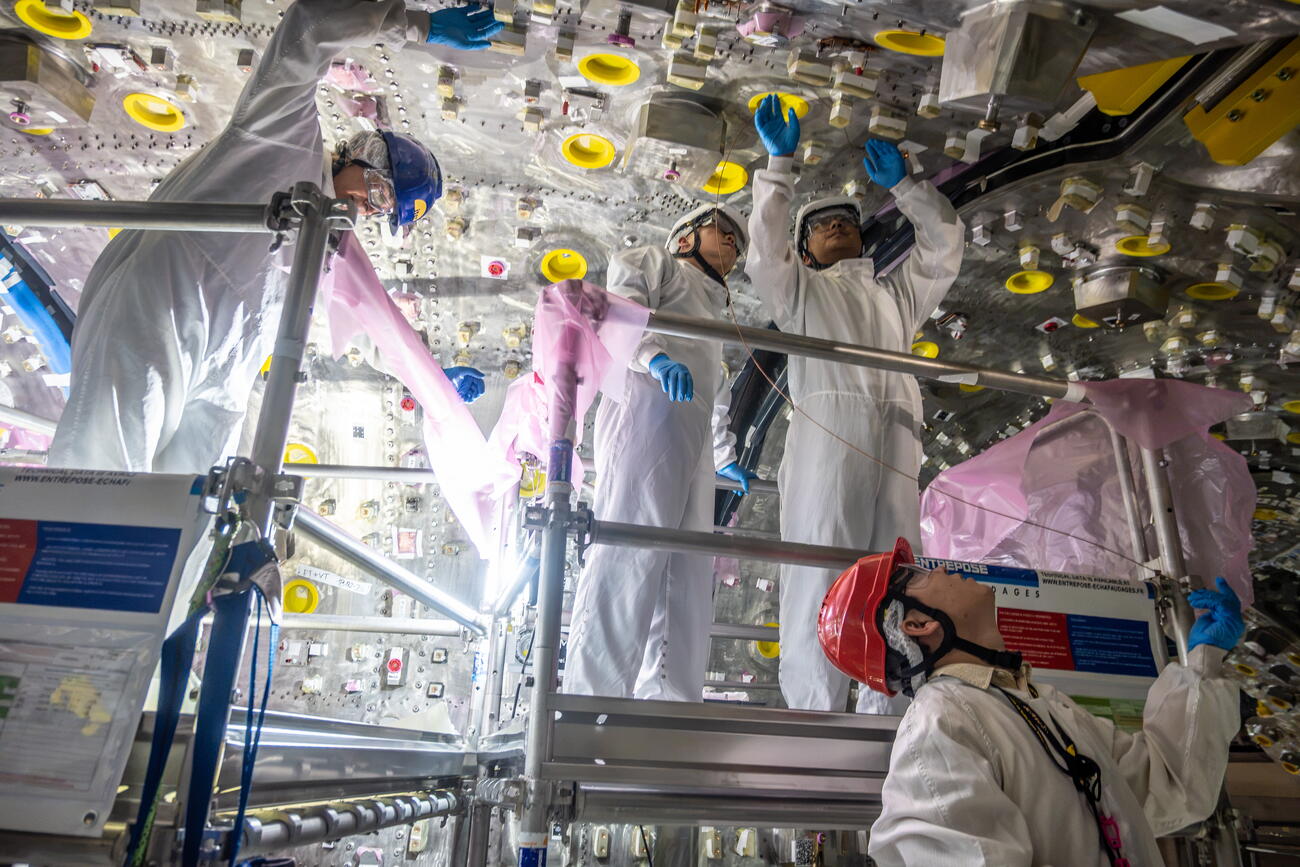
The ITER Organization announced on 9 November 2026 that flux-loop installation had begun inside the vacuum vessel of ITER, under construction in southern France. Work started on 5 November as part of the in-vessel assembly project. Slender copper-coated cables are being unspooled and secured along the vessel’s inner walls.
The plan calls for 230 loops comprising two kilometres of cable. Approximately 50% will be installed in the first phase, with the remaining 50% installed after the vacuum vessel sectors have been welded together. The announcement marks the start of installation, not completion of all 230 loops.
Flux loops are diagnostic instruments used to study plasma conditions. A change in the magnetic flux passing through a loop of conducting wire induces a voltage. Measuring that signal, together with data from other sensors, allows the plasma’s shape and position to be reconstructed. Rather than relying only on direct observation, the system uses changes in magnetic flux to understand plasma conditions.
Assembly of the large vacuum vessel is progressing alongside installation of the instruments that will measure the plasma inside it. The two-stage plan illustrates how diagnostic installation must be coordinated with vessel welding.
For ITER’s research goals and the wider construction programme, see FI’s introduction to ITER.
- ITER Organization, Following the thread, 9 November 2026
- ITER Organization, What is the plasma shape? Ask the flux loop, 15 October 2018 (diagnostic principles)
Information checked as of:2026-11-10
公式本文照合。発表11月9日、施工開始11月5日。230ループ、2km、約50%ずつは2026年発表の計画。2018年の234センサー・2.4kmは過去の説明として新記事の数値には使用せず、背景資料は原理説明のみ参照。全数設置・運転完了を意味しない。