Supplying electricity to fusion: ITER's grid connection, power conversion and outage protection
Fusion power supplies involve more than magnets and heating systems. ITER's grid connection, AC-to-DC conversion and emergency supplies illustrate the boundaries between equipment supply and operation that electrical companies need to consider.
Read the Japanese original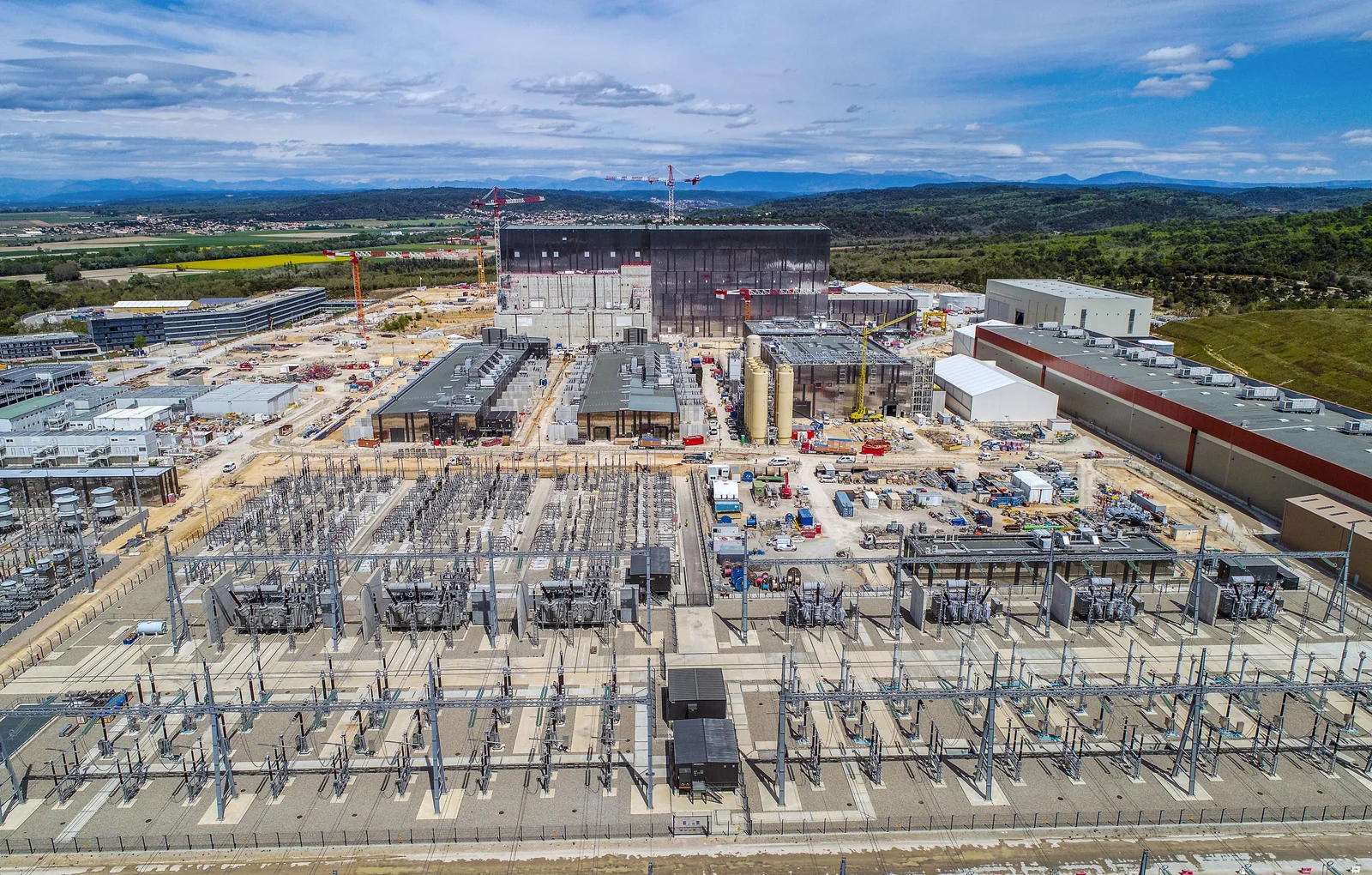
Before a fusion facility can operate, it must receive electricity from outside. Power for magnets, heating, cooling and controls underpins performance and safe shutdown. ITER's electrical infrastructure illustrates three distinct jobs: delivering power, converting it and preparing for interruptions.
Even technology aimed at generation needs an incoming supply
ITER is a fusion research machine, not a facility that generates and sells electricity. Its official power-supply explanation describes a connection to France's 400 kV transmission network. Steady-state power for the facility is separated from pulsed power for magnets and heating during plasma experiments. ITER's power-supply configuration
Here, pulsed means handling electricity demand that changes over time with experimental operation. Routine demand, including lights and offices, and large experimental loads cannot be represented adequately by a single average. The lead photograph shows ITER's substation connecting the transmission network and the facility.
Future power plants must also distinguish gross generation from net output after subtracting the plant's own consumption. ITER's incoming supply is not direct evidence of a future commercial reactor's economics or electricity requirements.
Convert grid AC into DC for the magnets
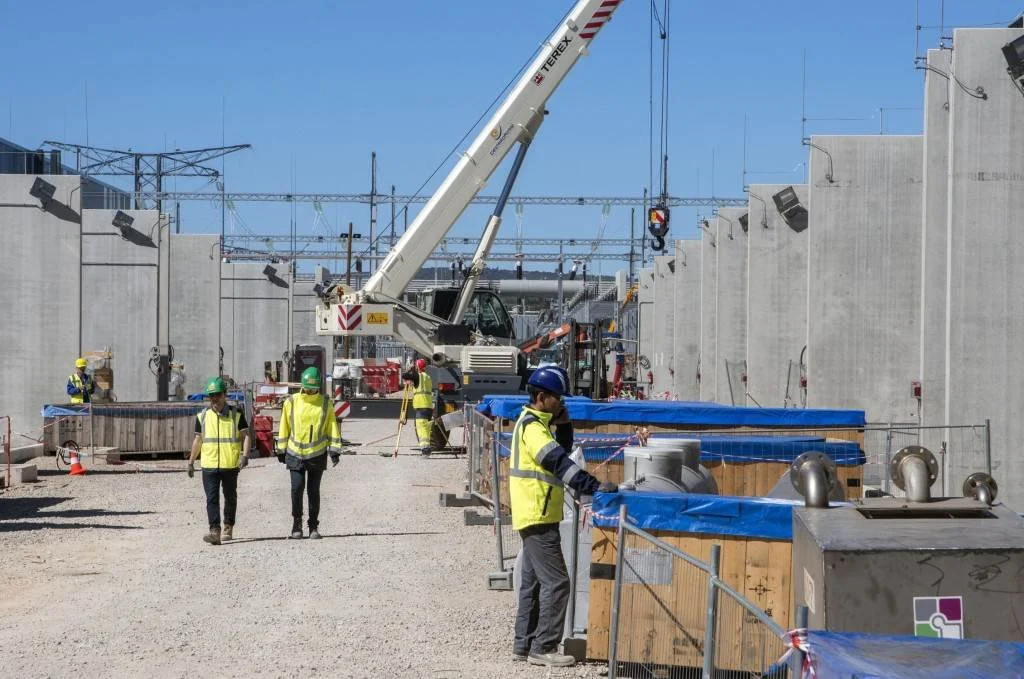
Electricity from the transmission network is not sent unchanged into superconducting magnets. ITER's magnet-power explanation describes transformers reducing voltage and rectifiers converting alternating current into large direct currents. A rectifier changes AC, whose direction periodically reverses, into DC flowing in one direction. Role of the Magnet Power Conversion Buildings
The photograph shows work in a transformer installation area in an official gallery dated May 20, 2019. It is a historical construction photograph, not evidence of equipment newly completed in October 2026.
Suppliers must address cooling, insulation, control connections and abnormal-condition protection as well as voltage and current ratings. Superconducting magnets do not eliminate surrounding power equipment. Component efficiency and stable operation of the complete system should be considered separately.
Design the high-current path together with the buildings
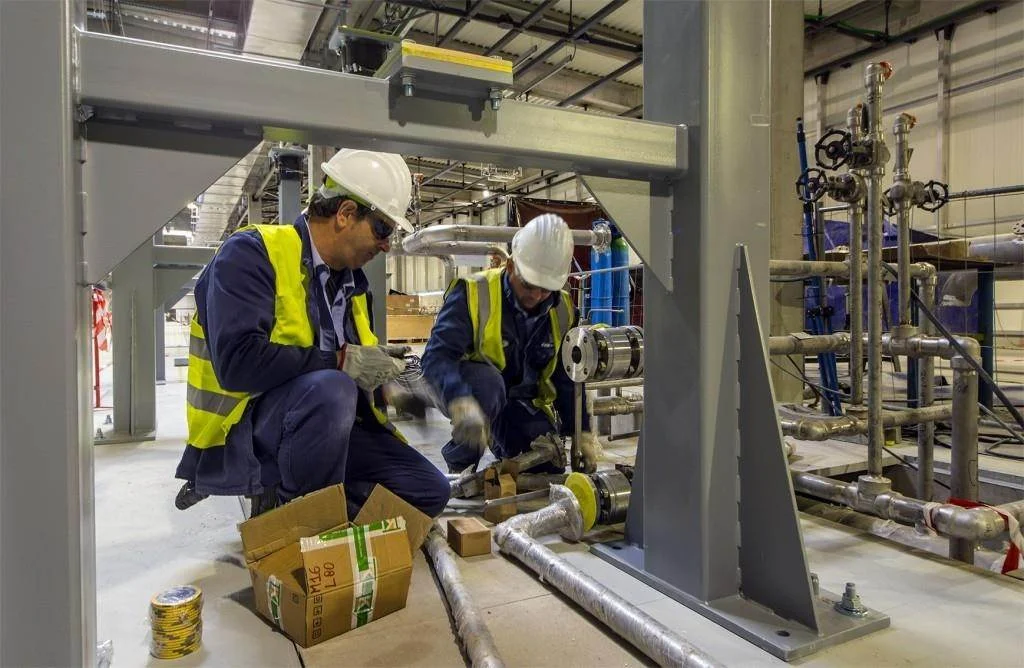
Current does not always reach magnets through thin wires. ITER uses conductors called busbars to connect the power buildings to the tokamak. Official descriptions include water-cooled busbars and bridges between buildings. Electrical design therefore connects with piping and building design.
The body photograph, published May 20, 2019, shows construction of busbar supports. It documents preparation of the route and supports, not completed busbars. Receiving space, support structures and inspection access matter alongside equipment specifications.
The following is business analysis. Defining a package simply as a complete power cabinet can leave responsibility unclear at wiring, cooling and installation interfaces. It is useful to translate connection points, construction sequence and inspection clearances into drawings and specifications at quotation stage.
Plan for outages by identifying what must be protected
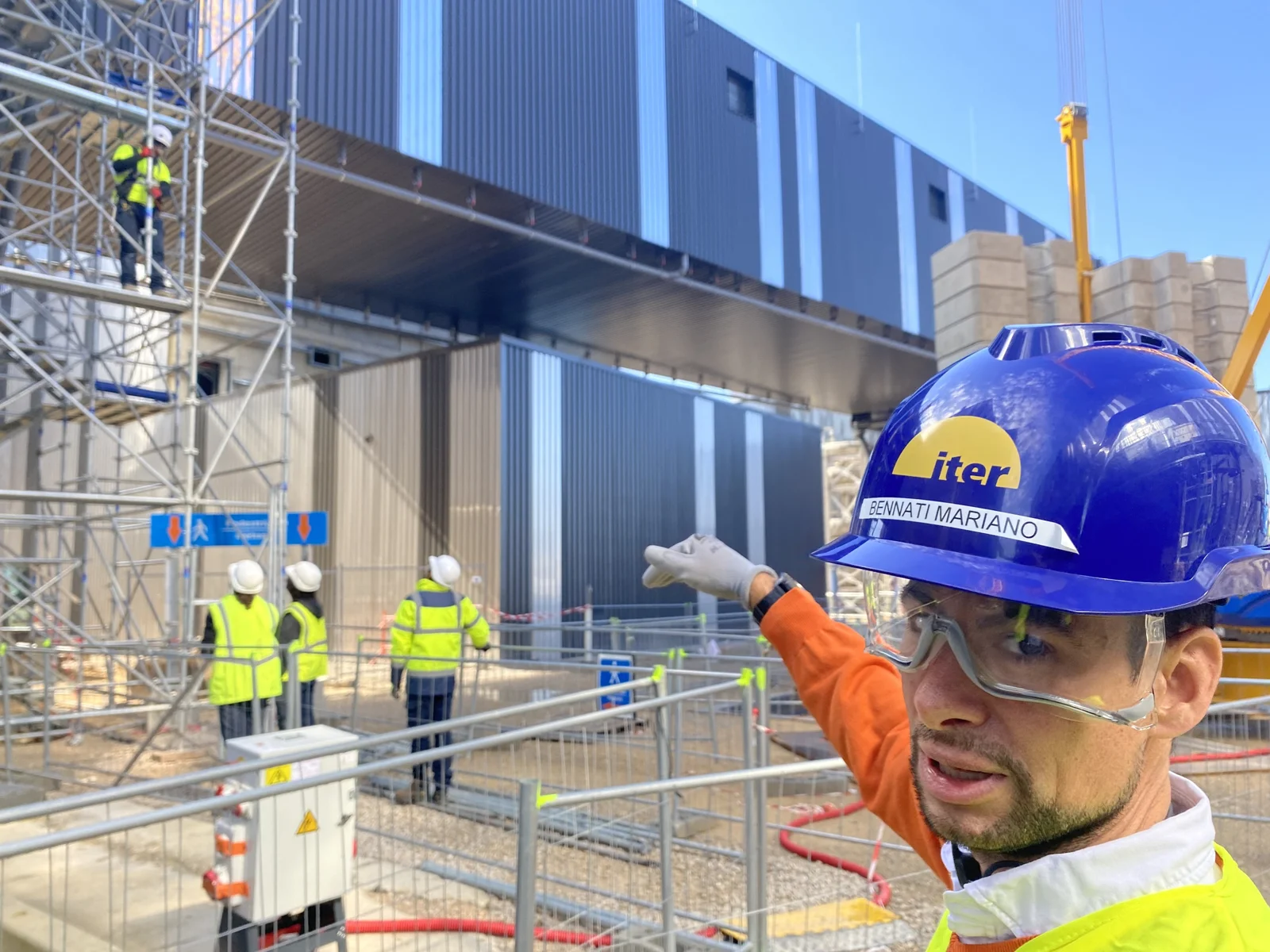
ITER's April 7, 2025 article distinguishes emergency-power buildings supporting safety-important functions from those preventing equipment damage and prolonged outages. For safety-related functions, it describes a plan for batteries and uninterruptible power supplies (UPS) to bridge the interval before emergency generators start. Emergency power and equipment protection
The photograph shows Building 47 and its responsible staff during construction. The article also describes two power-supply trains, but this cannot be treated as a universal design requirement for every fusion machine. The necessary provisions vary with safety requirements and the consequences of a shutdown.
A proposal should identify which functions transfer to which supply under which circumstances, not simply how many hours a backup lasts. Equipment protection, continuity of research and safety functions should not be bundled under one indistinct label.
Supply work continues after energization
ITER's January 28, 2019 report describes switching the site distribution system by shutting down and restoring buildings in sequence while checking loads and protective settings for each circuit. This was the start of operation of the distribution equipment at that time, not of the complete fusion machine. Example of a distribution-system switchover
The example shows work that is not completed by equipment performance alone. A proposal covering test procedures, transitions from existing equipment, verification of protective operation and recovery procedures can make use of an electrical company's experience. Published examples are not current procurement plans or guarantees of orders. Prospective entrants should check each customer's specifications, qualification requirements, contractual scope and on-site working conditions.
- ITER: Power supply (facility explanation; checked October 12, 2026)
- ITER: Magnet Power Conversion Buildings (facility explanation and photographs dated May 20, 2019; checked October 12, 2026)
- ITER: Electrical infrastructure taking shape (April 7, 2025; construction plans at the time)
- ITER: Independance Day (January 28, 2019; distribution switchover on January 26)
Information checked as of:2026-10-12
Technical and practical explanation based on ITER's published examples from 2019 and 2025. It does not establish commercial electricity generation or current procurement plans.