Muon-catalyzed fusion: What is it really?
A muon, about 207 times heavier than an electron, can bring nuclei together and repeatedly catalyze fusion. A 2026 molecular observation and Japan's research program explain the mechanism and the questions on the path to power.
Read the Japanese original
Fusion needs extraordinarily hot fuel. Or does it? A tiny particle called a muon can help nuclei fuse without turning the fuel into an ultrahot plasma. And it need not stop after one reaction: the same particle can help bring about the next one. Researchers in Japan are exploring whether this unusual process can become a useful source of energy.
A heavier cousin of the electron brings nuclei closer
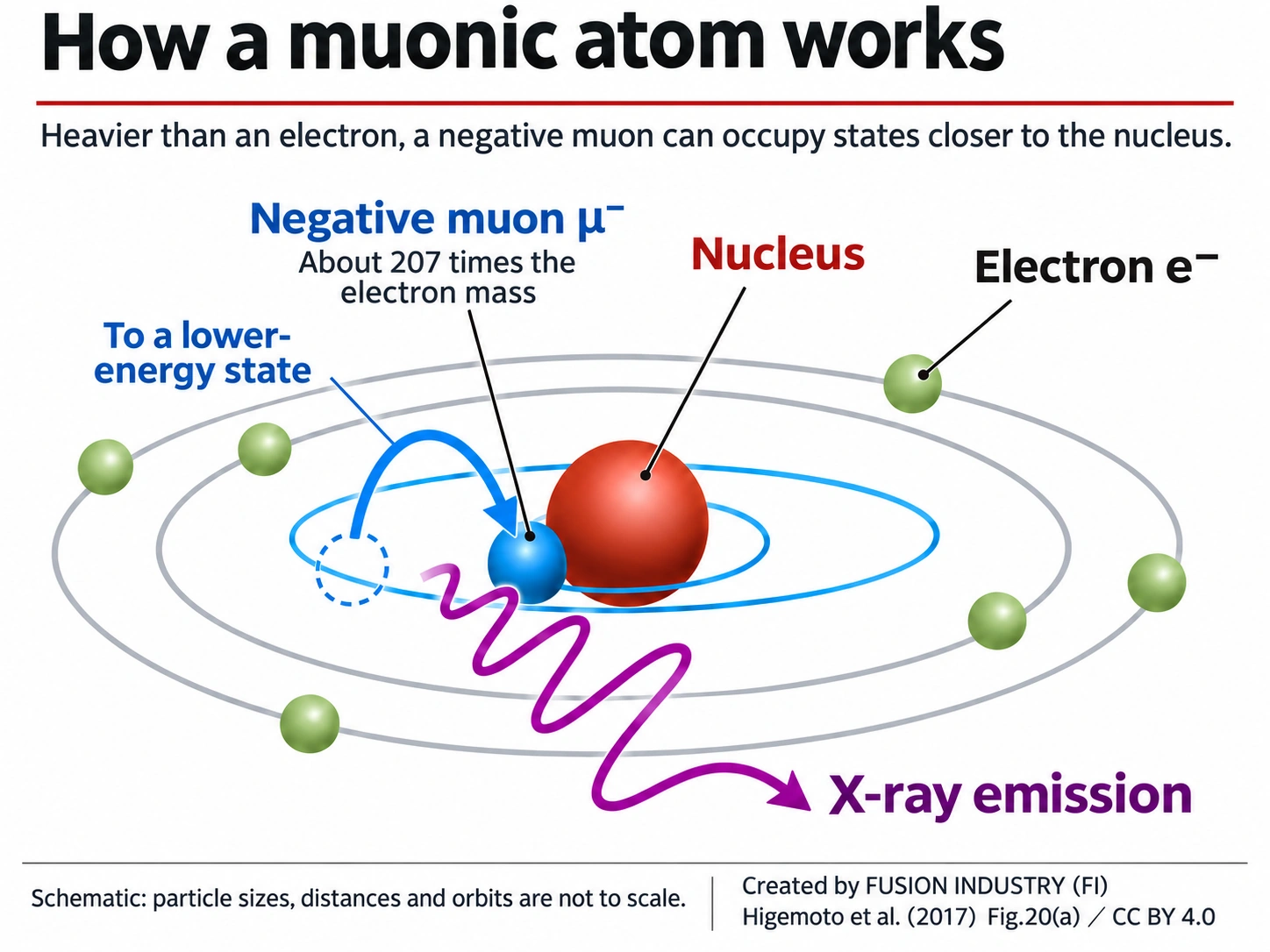
A muon is an elementary particle with properties similar to those of an electron, but roughly 207 times its mass. Muons occur naturally through cosmic-ray interactions and can also be produced using accelerators. Muon-catalyzed fusion uses negatively charged muons, which have the same electric charge as electrons.
Their greater mass makes the difference.
When a muon takes the place of an electron in binding hydrogen-isotope nuclei into a molecule, it can bring those nuclei much closer together. Deuterium and tritium, both isotopes of hydrogen, can then get close enough for fusion to occur readily despite their electrical repulsion.
Rather than heating the fuel so that nuclei collide at high speed, this approach uses a muon to help them approach one another. It is known as muon-catalyzed fusion.
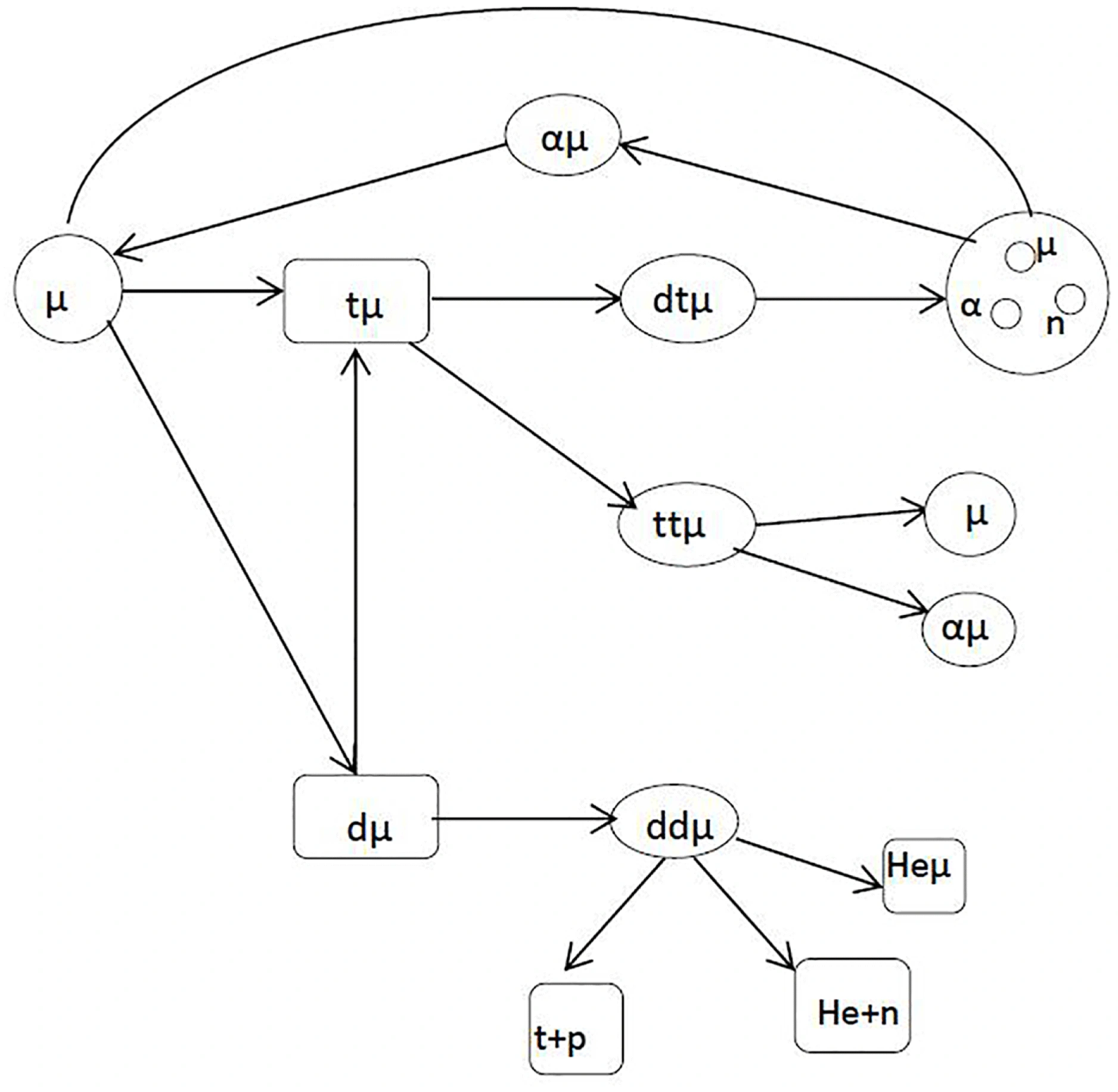
After fusion, the muon can bind another pair of nuclei. Like a catalyst in chemistry, one particle can take part repeatedly. This is not merely a proposed reaction: muon-catalyzed fusion has already been observed in experiments.
A mean lifetime of just 2.2 millionths of a second
The catalyst has little time to work. A muon's mean lifetime is about 2.2 microseconds, or 2.2 millionths of a second.
A muon can also stick to the helium nucleus produced by fusion and become unavailable for the next reaction. Researchers therefore need to understand how quickly, and how often, it can catalyze fusion before it decays or is lost from the cycle.
Producing muons and delivering them to the fuel also takes energy. Avoiding an ultrahot plasma does not automatically make electricity cheap. The entire process, including muon production and delivery, must yield more useful energy than it consumes.
In 2026, researchers in Japan caught an intermediate step
In April 2026, an international team including Chubu University and Tohoku University announced direct observation of resonant states of muonic molecules involved in the fusion reaction cycle.
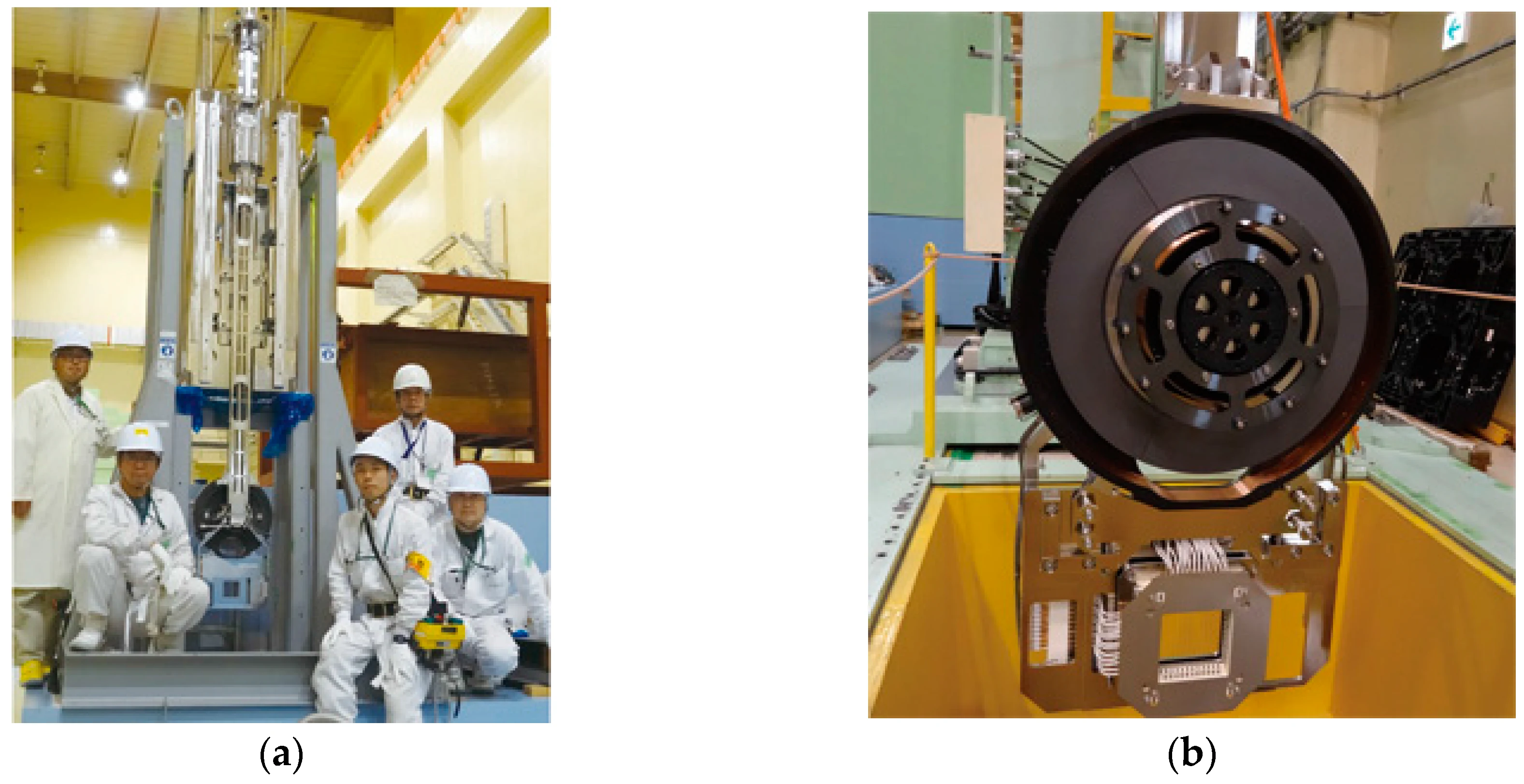
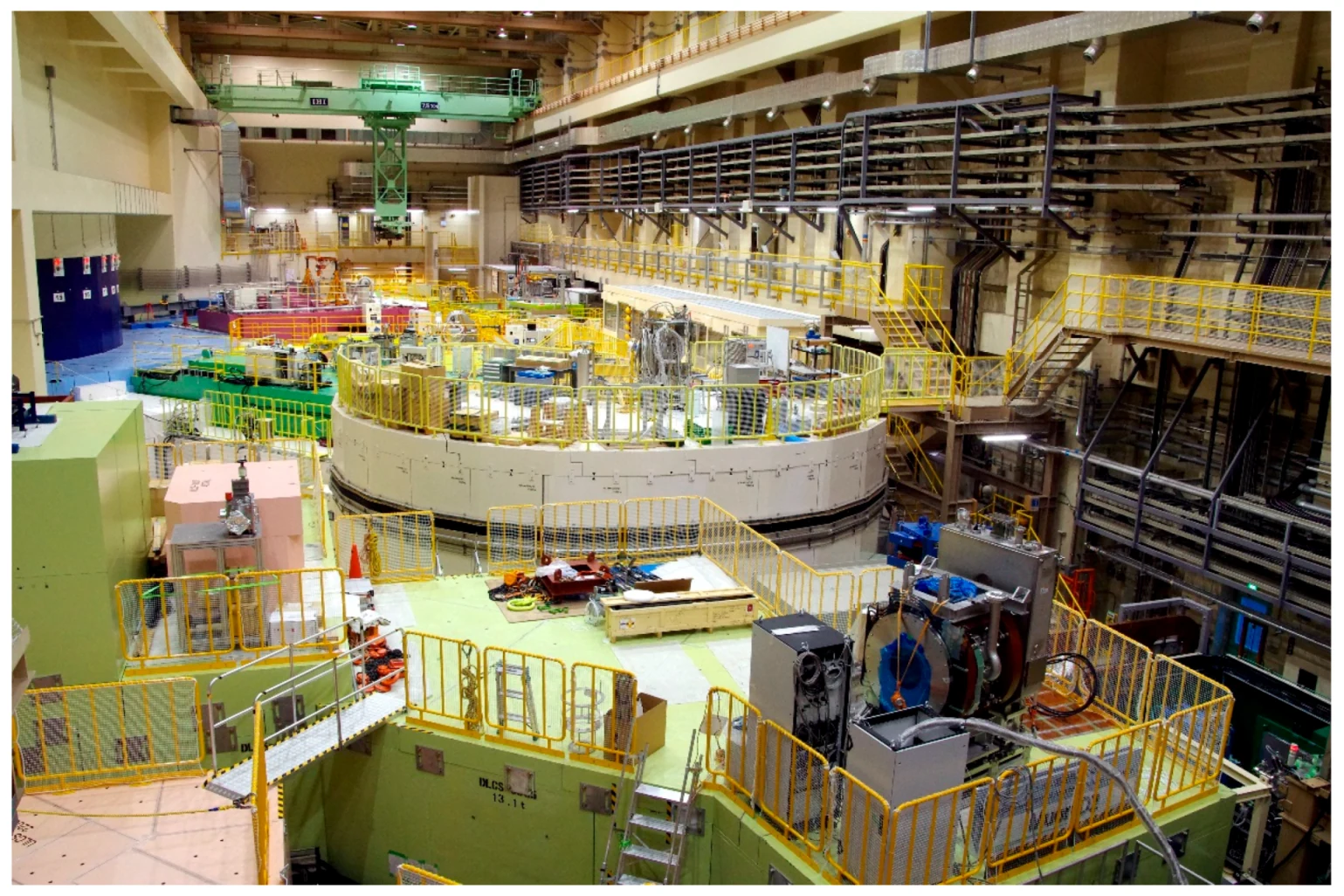
The experiment took place at J-PARC in Tokai, Ibaraki Prefecture. The team introduced negative muons into solid deuterium and measured the resulting X-rays with a high-resolution detector. The spectrum allowed them to identify short-lived states of molecules containing a muon.
Behind the technical language is a practical question: which paths does a muon follow as it helps form a molecule that can undergo fusion? Observing those intermediate steps gives researchers evidence for understanding how to make the cycle run faster.
This was not a demonstration of power generation. The experiment investigated the reaction mechanism using deuterium. Whether an entire system using the promising deuterium–tritium combination can achieve a favorable energy balance remains a separate question.

Toward power, one particle's working life at a time
Japan's JST Moonshot Research and Development Program supports a project titled “Social implementation of innovative muon-catalyzed fusion technology.” Its goals include clarifying conditions and mechanisms for more efficient reactions by 2029 and demonstrating the feasibility of a favorable energy balance by 2034.
At a JST workshop in September 2026, researchers discussed a scenario in which each muon would catalyze about 1,000 fusion reactions. That is a target under consideration for an energy plant, not a result already achieved.
Instead of managing a large, hot plasma, these researchers are examining what happens to one muon in an exceptionally short span of time. How many times can it work? Can fewer muons be lost along the way? Can the process recover the energy spent producing them?
The experiment revealed an intermediate step in the catalytic process. The next question is whether that understanding can help increase the number of fusion reactions and improve the energy balance.
Primary sources
- KEK, “ミュオンとは” (What is a muon?): https://www2.kek.jp/imss/msl/muon-tour/outline.html
- KEK, “ミュオン触媒核融合” (Muon-catalyzed fusion): https://www2.kek.jp/imss/msl/muon-tour/fusion.html
- Y. Toyama et al., “Direct observation of muonic molecules in resonance states critical to muon catalyzed fusion,” Science Advances 12, eaed3321, 15 April 2026. https://doi.org/10.1126/sciadv.aed3321
- KEK QUP research announcement, 16 April 2026: https://www2.kek.jp/qup/en/news/detail20260416.html
- JST, Okada project: https://www.jst.go.jp/moonshot/program/goal10/A4_okada.html
- JST workshop on a scenario for 1,000 muon-catalyzed fusion reactions, 7 September 2026: https://www.jst.go.jp/moonshot/sympo/20260907/index.html
Sources checked on 11 November 2026. This is an explainer that includes research published in April 2026.
- KEK, “ミュオンとは” (What is a muon?)
- KEK, “ミュオン触媒核融合” (Muon-catalyzed fusion)
- Y. Toyama et al., “Direct observation of muonic molecules in resonance states critical to muon catalyzed fusion,” Science Advances 12, eaed3321, 15 April 2026.
- KEK QUP research announcement, 16 April 2026
- JST, Okada project
- JST workshop on a scenario for 1,000 muon-catalyzed fusion reactions, 7 September 2026
Information checked as of:2026-11-11
Explainer covering an April 2026 research result and published research targets, not a demonstration of power generation.