What exactly is fusion energy? 1g, eight tonnes of oil, and three powerful reasons to care
One gram of fuel, heat comparable to eight tonnes of oil, raw materials in seawater and a reaction that stops when its conditions fail: discover fusion’s three big advantages and research in Japan and worldwide.
Read the Japanese original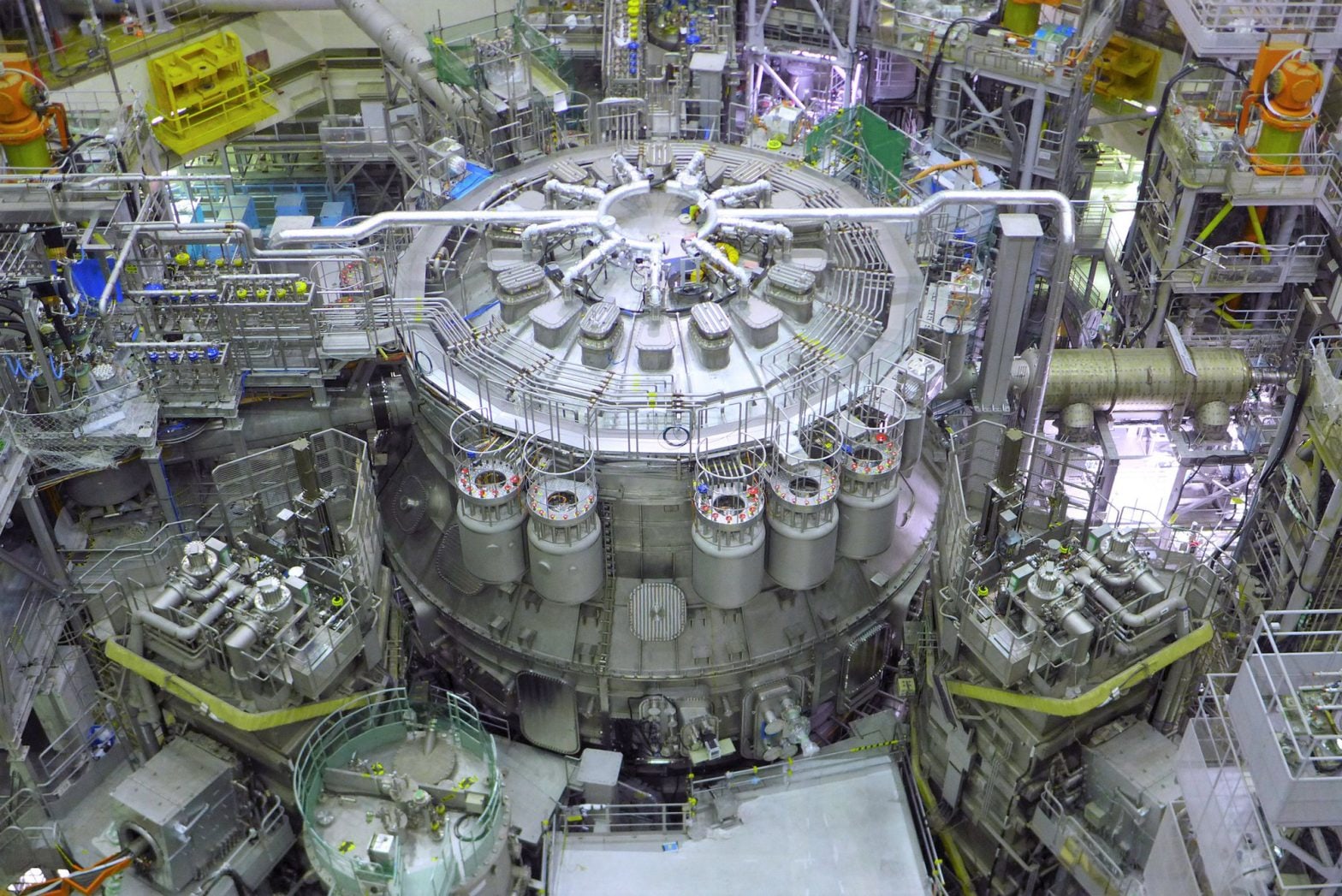
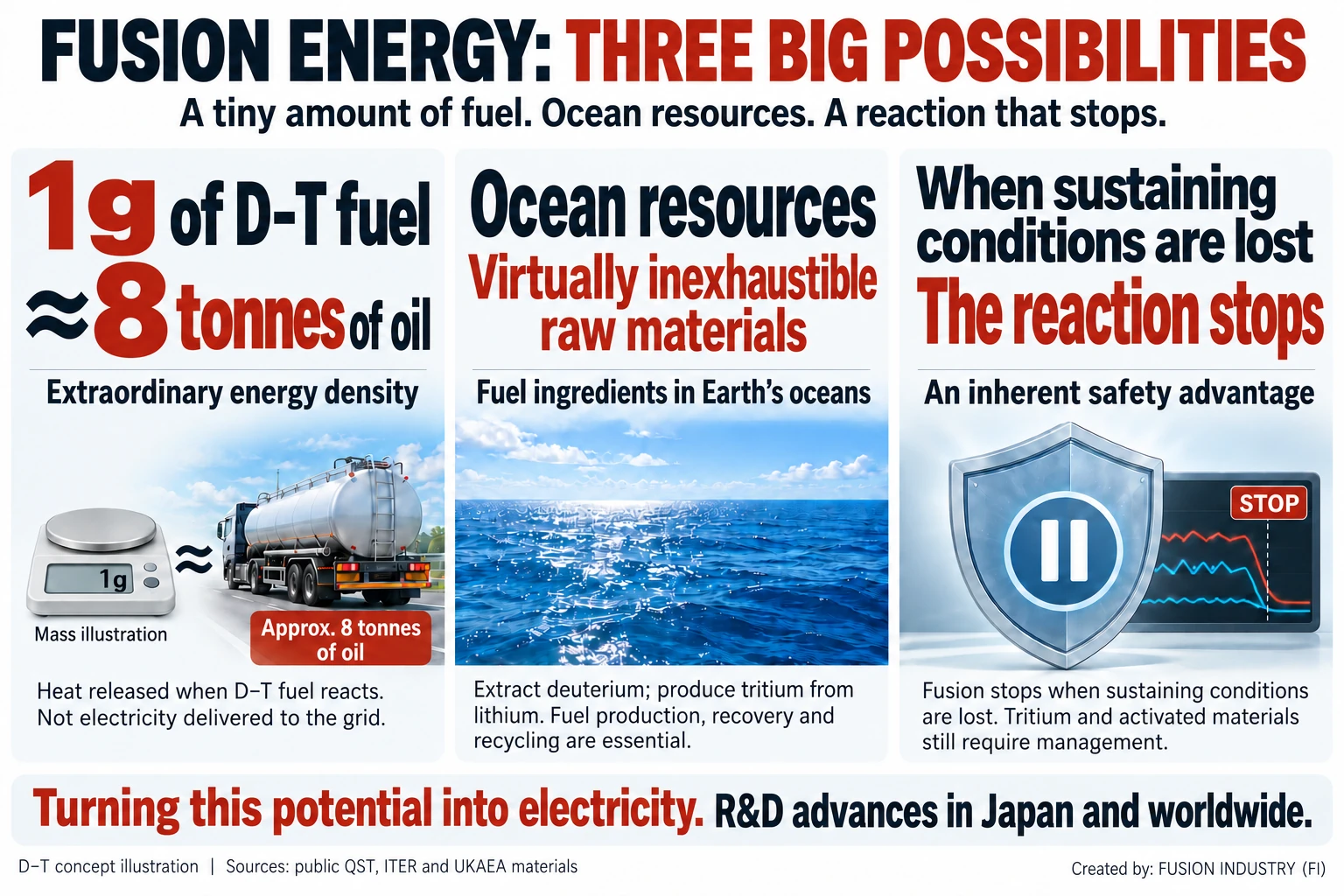
One gram of D–T fuel can release heat comparable to burning about eight tonnes of oil. Its raw materials include resources found in seawater. And the reaction stops when the conditions needed to sustain it disappear. These three advantages explain why Japan and the wider world are pursuing fusion energy.
The process that makes the Sun shine could become an energy source here on Earth: immense energy from little fuel, broadly available resources and important safety advantages. Here is how that promise works.
Advantage 1: one gram of fuel, about eight tonnes of oil
One gram versus eight tonnes—a difference in mass of roughly eight million times. Japan’s QST compares the heat released by fusion of one gram of deuterium–tritium fuel with the heat from burning about eight tonnes of oil. That is an extraordinary energy potential in a tiny quantity of fuel. QST: The scale of fusion energy
Combustion changes bonds between atoms; fusion changes the nuclei themselves. This high energy density opens a different prospect from continuously burning large quantities of fuel.
The comparison concerns heat released by the reaction, not delivered electricity. Capturing the heat, generating electricity and subtracting the plant’s own consumption require efficient engineering. Energy density and electrical efficiency are different measures, but the energy available from little fuel is the compelling starting point. UKAEA: From heat to electricity
Advantage 2: raw materials in the sea, a virtually inexhaustible resource base
The oceans contain raw materials for fusion fuel. Deuterium can be extracted from water, while lithium—the material used to produce tritium—is also present in seawater. Small fuel requirements combined with abundant, widely distributed inputs make fusion attractive as a long-term resource. QST: Why pursue fusion energy?
An energy resource less tied to particular oil and gas regions could broaden supply options. QST describes the enormous resource potential of recovering lithium from seawater. That long-term abundance is the sense in which the resource is described as virtually inexhaustible.
Seawater does not go straight into a reactor. Deuterium must be separated; tritium must be produced from lithium, recovered and recycled. Turning abundant resources into a working fuel supply is itself an important part of fusion research. ITER: Tritium breeding and fuel research
Advantage 3: a reaction that stops when its conditions fail
Fusion cannot continue without the conditions that sustain it. Temperature, density and confinement have to work together. When those conditions are lost, the plasma cools and the reaction cannot be maintained. This is an important intrinsic safety advantage. ITER: Safety and environment
Unlike a fission chain reaction, fusion uses a different physical mechanism with small quantities of controlled fuel. The reaction itself also emits no carbon dioxide. These safety and low-carbon characteristics help explain its appeal as a future energy source. ITER: Advantages of fusion
A real installation still needs tritium management, protection against neutron activation, shielding and maintenance. The proposition is not zero risk: it is to combine a reaction that readily stops with appropriate engineering safeguards. IAEA: Fusion’s environmental and safety context
In one sentence: joining atomic nuclei to release energy
Burning coal or natural gas mainly changes the bonds between atoms. Fusion changes the nuclei at their centres. Light nuclei combine, releasing energy corresponding to the difference in mass before and after the reaction. Fission works in the opposite direction, splitting a heavy nucleus. ITER: What is fusion?
The Sun shines through fusion, but a terrestrial machine is not simply a miniature Sun. Without the Sun’s enormous gravitational confinement, researchers need different fuels and confinement methods. Many leading approaches use deuterium (D) and tritium (T), two forms of hydrogen. Their reaction produces a helium nucleus and a neutron. IPP: Fusion on Earth
At very high temperatures, electrons and nuclei move separately in a state called plasma. Magnetic confinement uses magnetic fields to control these electrically charged particles. Instead of packing a hot solid into a vessel, researchers control a thin plasma while keeping it away from the walls. UKAEA: How fusion works
Japan and the world are working on different parts of the problem
Fusion research is not a race between interchangeable machines. Stable confinement, self-heating by fusion products, materials, fuel systems and maintenance are advancing in parallel.
QST / JT-60SA
A superconducting tokamak jointly developed by Japan and Europe in Naka, Japan, studying plasma control. Not a generating plant. QST announced the start of integrated commissioning for heating experiments in March 2026
NIFS / the LHD research legacy
Helical plasma research in Toki, Japan, with extensive experimental data and expertise in diagnostics, theory and computation. LHD experiments concluded on 25 December 2025. Data analysis and subsequent research continue
ITER
An international experiment under construction in France, studying D–T plasmas in which self-heating becomes important and related engineering. An experimental reactor designed for fusion output, not electricity generation or delivery to the grid
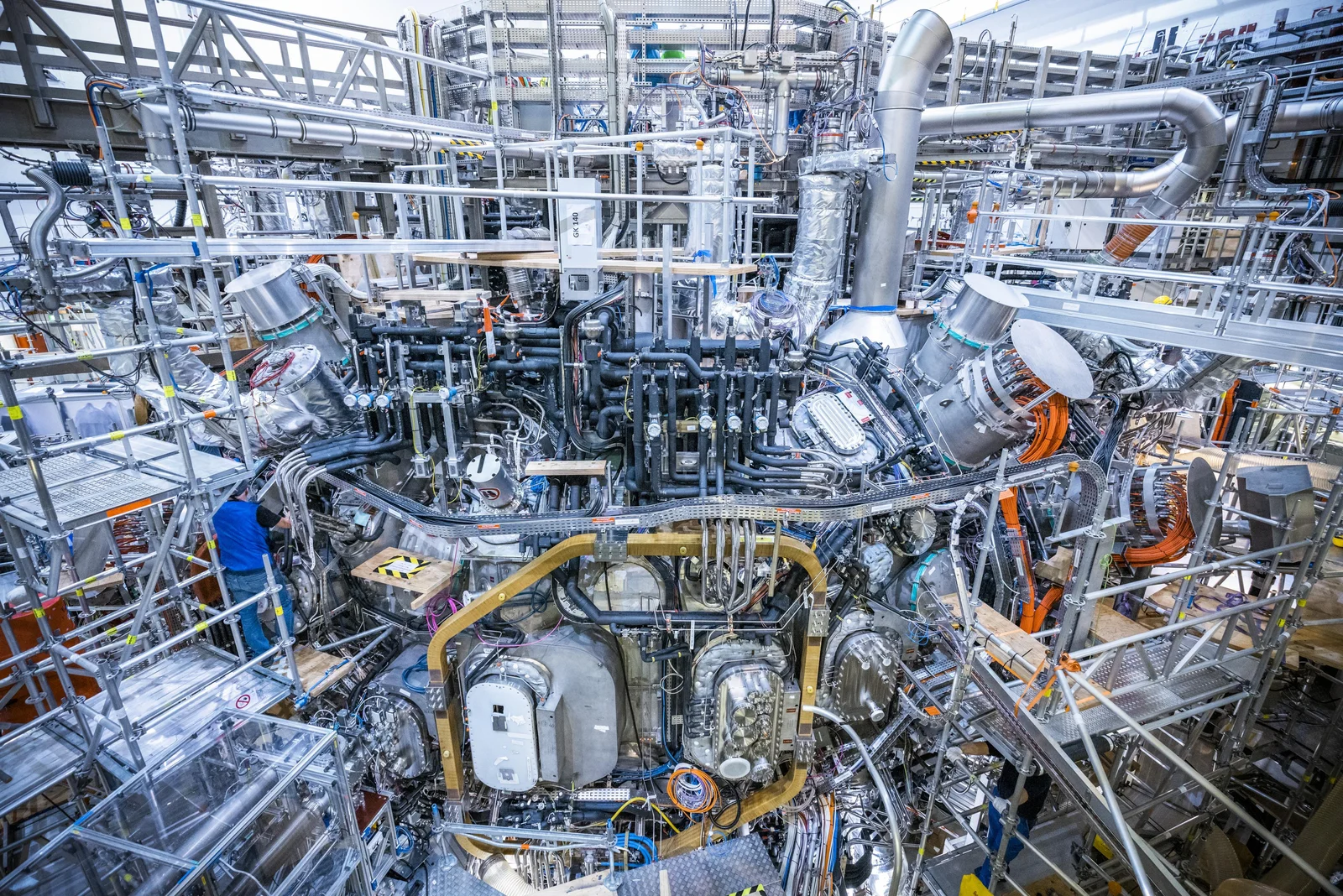
IPP / Wendelstein 7-X
A stellarator in Germany, studying confinement and long-duration operation using fields shaped by complex external coils. A research machine investigating the concept’s suitability, not a power plant
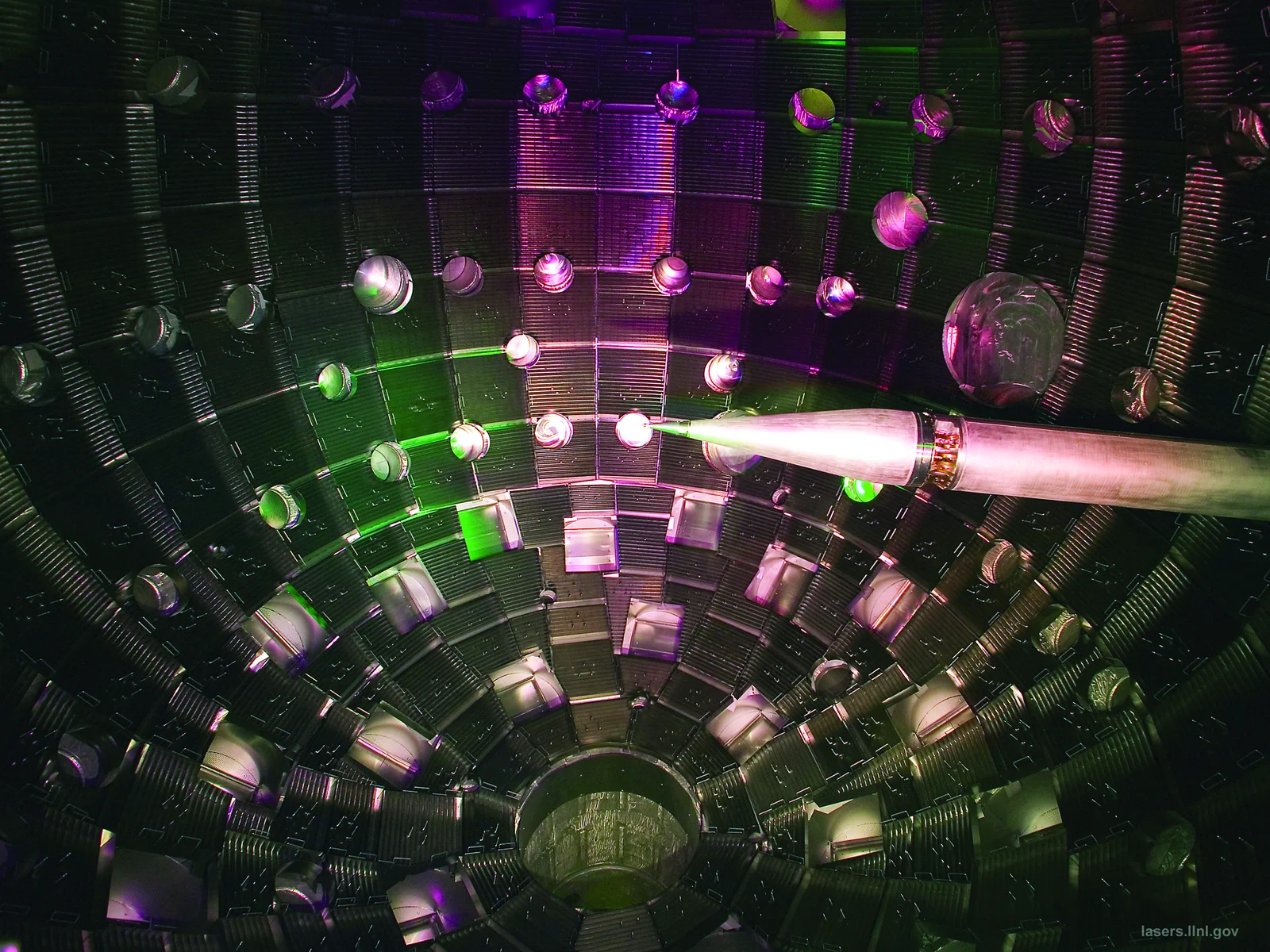
LLNL / NIF
A US laser facility studying fusion ignition by rapidly compressing small fuel targets. The 2022 ignition achievement compared fusion energy with laser energy delivered to the target, not net electricity from the facility
Sources: QST’s 13 March 2026 announcement; NIFS’s record of the completion of LHD experiments; ITER’s goals; IPP’s W7-X introduction; LLNL’s ignition record.
These are representative examples of research roles, not a complete directory of the world’s institutions. International collaborations, national programmes and private developers compete, but also share technologies and expertise.
Turning the energy into equipment society can use
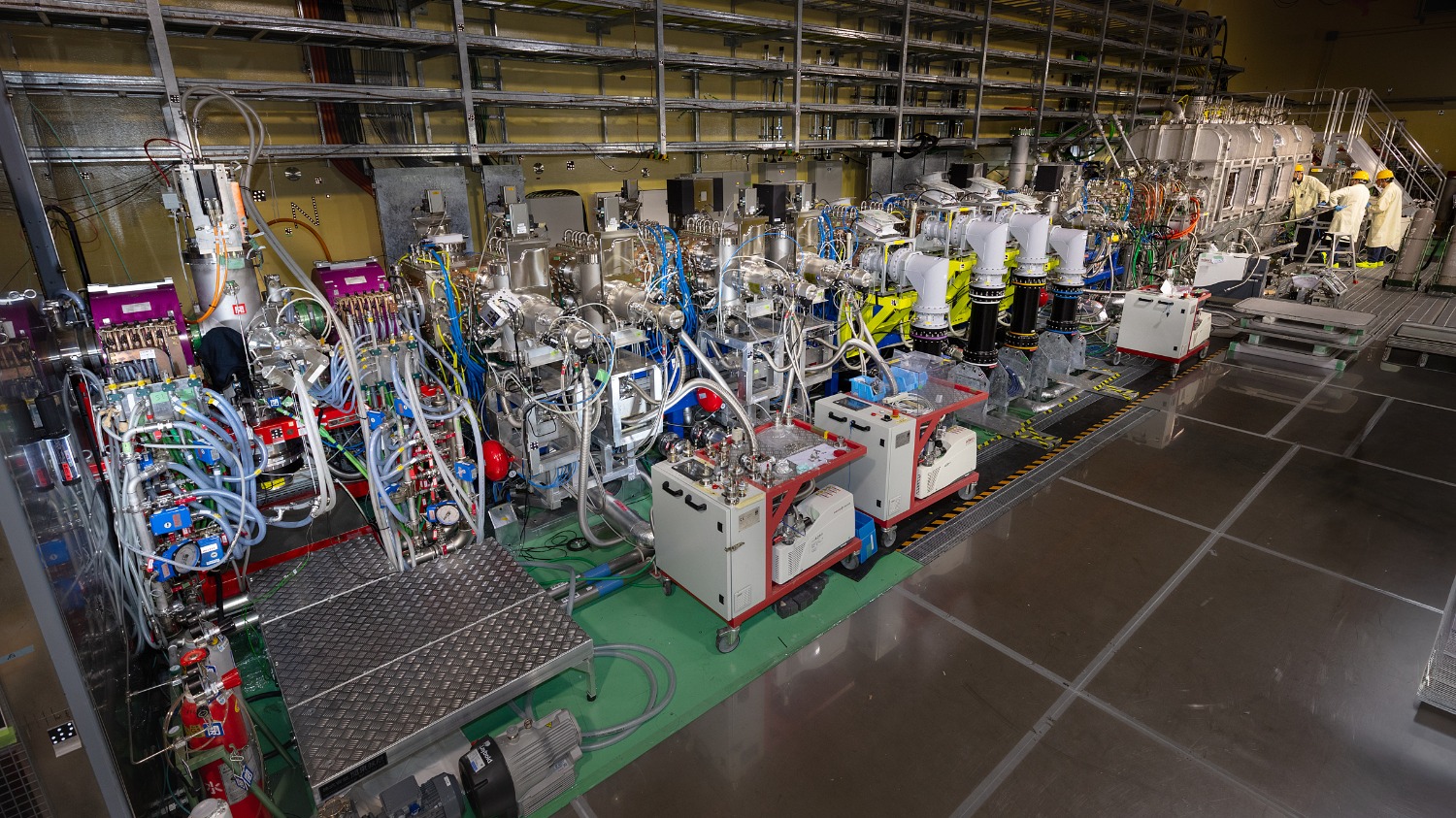
There is a great deal of work beyond the hot plasma. LIPAc in Rokkasho is a Japanese–European accelerator facility validating technology for future fusion-material neutron sources. F4E reported completion of its full configuration in April 2026. Completing assembly is not the same as demonstrating final operating performance. F4E: LIPAc assembly and commissioning
Moving and precisely installing or removing reactor components matters too. An ITER remote-handling tool has undergone physical tests with a heavy dummy load. Materials, machinery, power supplies, vacuum, control and maintenance must work together before fusion becomes an energy system that can keep operating. F4E: ITER remote-handling equipment
When you next see a fusion announcement, ask three questions: What was achieved? Where was the measurement boundary? Is this a result or a future objective? A temperature record, a long plasma pulse and a corporate partnership represent different kinds of progress.
Fusion is not an unconditional, magical power source. Its promise is the possibility of drawing large amounts of energy from atomic nuclei, using abundant raw materials and a controllable reaction. Turning that promise into equipment with a working fuel cycle, replaceable components and electricity for users is the challenge researchers and engineers in Japan and around the world are tackling.
- QST: The scale of fusion energy
- UKAEA: How fusion works
- QST: Why pursue fusion energy?
- ITER’s goals
- ITER: Safety and environment
- ITER: Advantages of fusion
- IAEA: Fusion’s environmental and safety context
- ITER: What is fusion?
- IPP: Fusion on Earth
- UKAEA: How fusion works
- QST’s 13 March 2026 announcement
- NIFS’s record of the completion of LHD experiments
- ITER’s goals
- IPP’s W7-X introduction
- LLNL’s ignition record
- F4E: LIPAc assembly and commissioning
- F4E: ITER remote-handling equipment
Information checked as of:2026-10-30