High-temperature superconducting magnets
- Official name
- Magnets using high-temperature superconducting materials
- ENGLISH
- High-temperature superconducting magnets
Magnet technology for producing strong magnetic fields. CFS uses REBCO high-temperature superconducting materials in more compact high-field tokamaks.
Read the Japanese original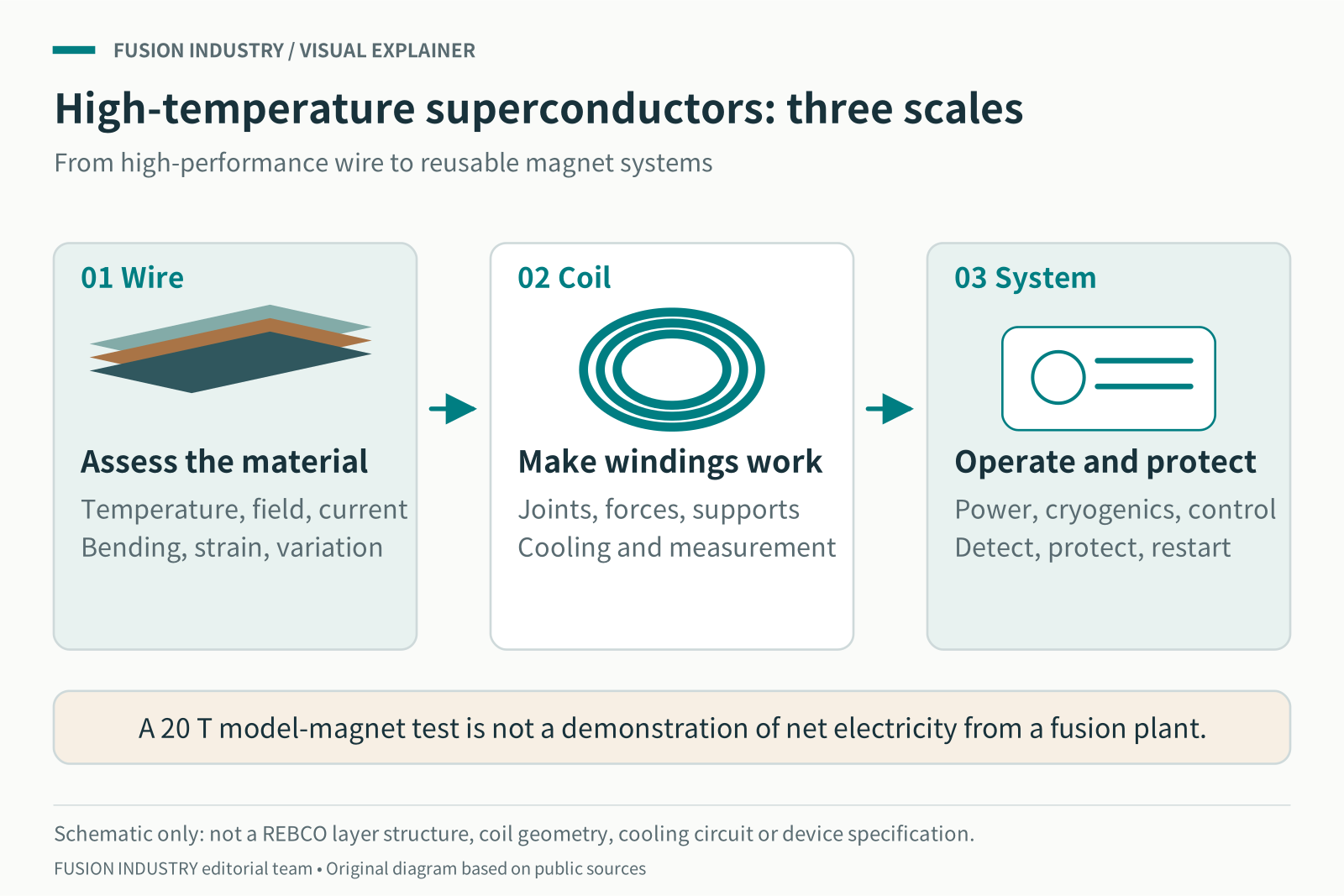
Magnet technology for producing strong magnetic fields. CFS uses REBCO high-temperature superconducting materials in more compact high-field tokamaks.
Business considerations
Consider manufacturing repeatability, maintenance, quality assurance and supply availability alongside individual performance. Check the reactor's overall objectives and the scope demonstrated for each component.
Understanding the organizations and companies
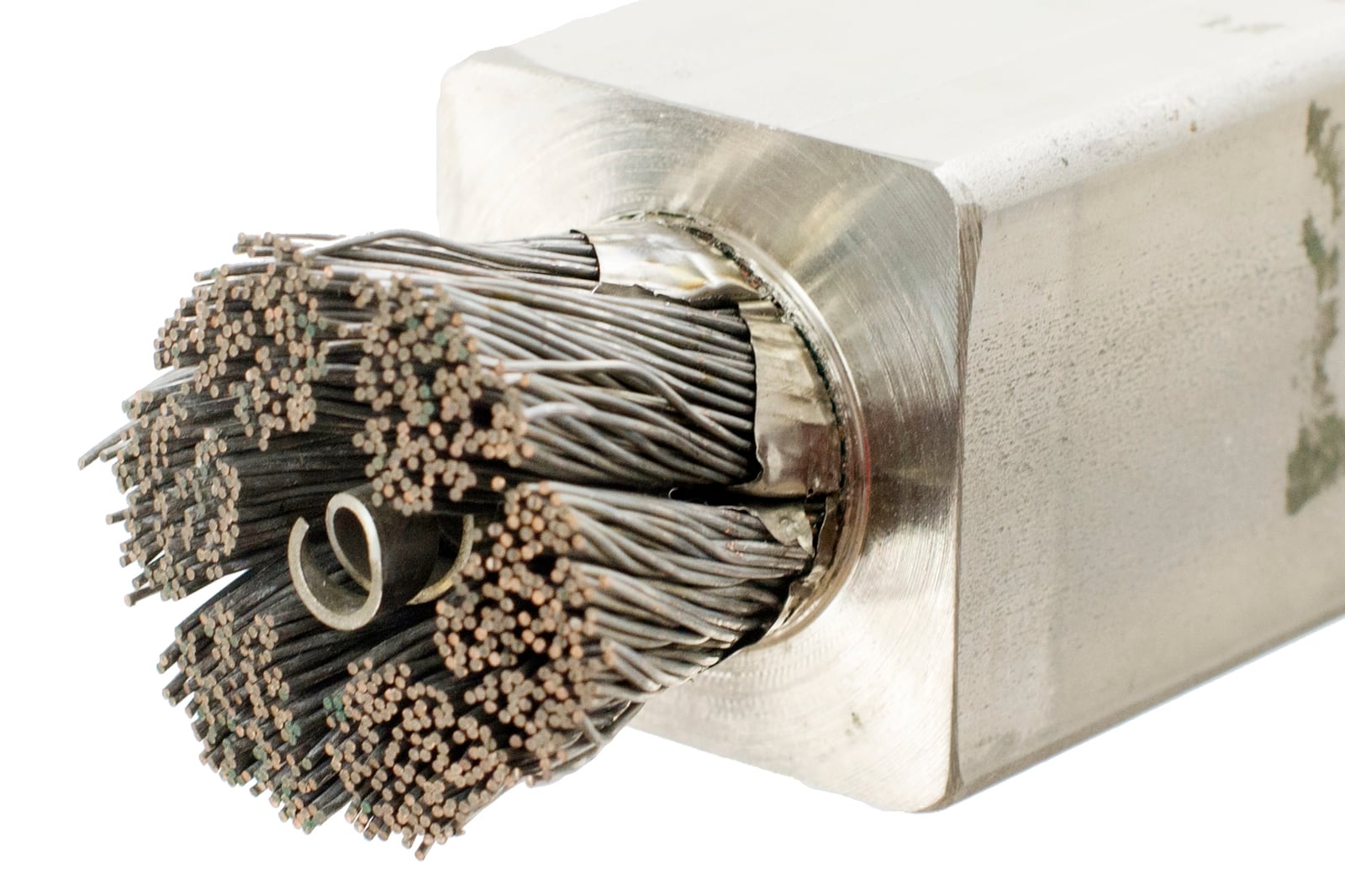
'High-temperature superconducting' does not mean operation at room temperature; it describes materials that can superconduct at higher temperatures than conventional low-temperature superconductors. Fusion magnets still require cooling. Conductor manufacture, cabling, winding and joining, mechanical support, and protection and inspection are separate stages. Do not label a photograph of an ITER niobium-tin conductor as REBCO high-temperature superconducting tape.
Furukawa Electric / SuperPower / Commonwealth Fusion Systems / Helical Fusion / Proxima Fusion
Official information from related companies and research institutions
Check each organization’s announcements for development progress and technical documentation.