Japan’s Fusion Research Landscape: QST, NIFS and Osaka
A guide to Japan’s three major fusion research hubs: their distinct roles, industrial connections and what overseas partners should check before seeking access.
Read the Japanese original 日本語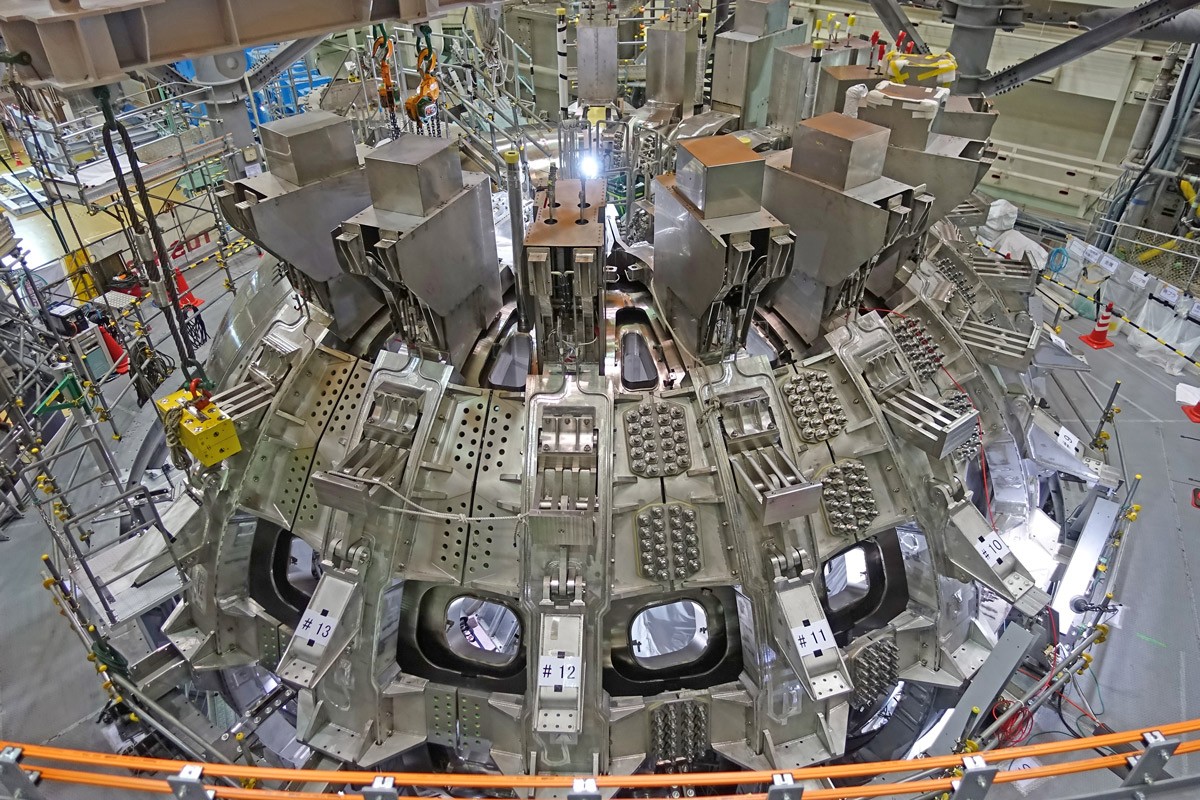
For an overseas researcher or supplier, Japan’s fusion sector is easier to navigate once three institutions are placed in context. The National Institutes for Quantum Science and Technology (QST) connects Japan’s ITER contribution, JT-60SA operations and demonstration-reactor development. The National Institute for Fusion Science (NIFS) provides a broad academic and training network. The Institute of Laser Engineering (ILE) at The University of Osaka develops a different route through powerful lasers.
Their responsibilities overlap, but their projects, access arrangements and industrial relationships are not interchangeable. This guide explains those distinctions using Japan’s published strategy and institutional descriptions.
What Japan’s strategy assigns to each institution
Japan’s Fusion Energy Innovation Strategy, revised on 4 June 2025, calls for a QST-centered framework involving universities and industry in demonstration-reactor development. It also supports stronger research infrastructure at QST, NIFS, ILE and other institutions. The Cabinet Office coordinates policy across government; the strategy does not make NIFS or the university subordinate units of QST. Japan’s revised strategy, in Japanese
The Japanese term *genkeiro* refers here to a demonstration reactor: a development step connecting experimental knowledge to electricity-generation systems. That involves fuel handling, materials, heat extraction and maintenance as well as plasma performance. Understanding which institution addresses which problem is more useful than ranking facilities by physical size.
QST connects international projects and reactor development
Two places matter particularly: Naka in Ibaraki Prefecture, northeast of Tokyo, and Rokkasho in Aomori Prefecture, in northern Honshu. QST’s fusion activities link these research sites with international projects and industrial partners. QST’s fusion research overview
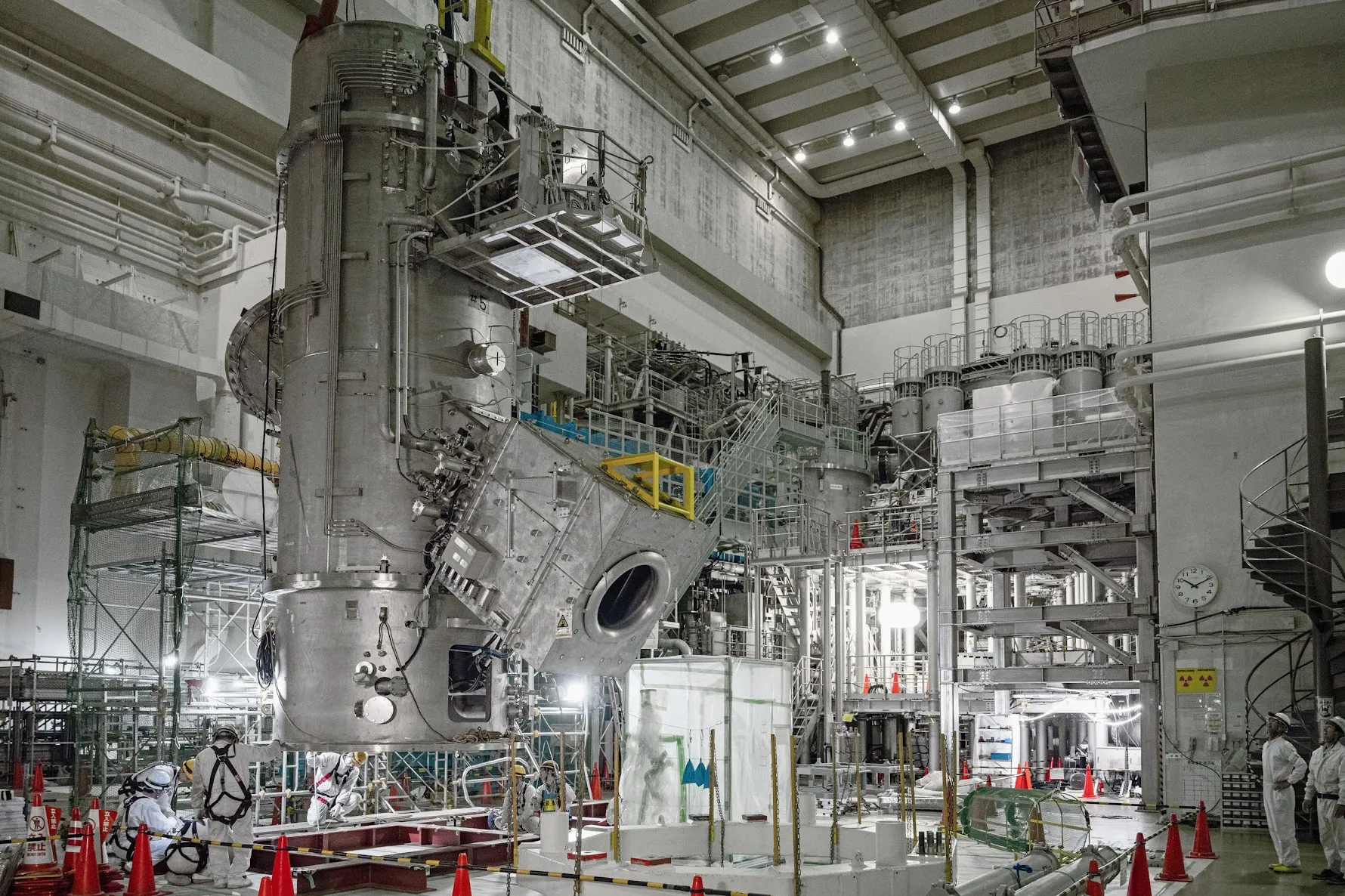
At Naka, JT-60SA is a superconducting tokamak developed and operated through Japanese–European cooperation. Its purposes include research supporting ITER, complementary research for future demonstration reactors, and training. It investigates how to control and sustain demanding plasma conditions; it is not an electricity-selling power station. JT-60SA’s research purposes
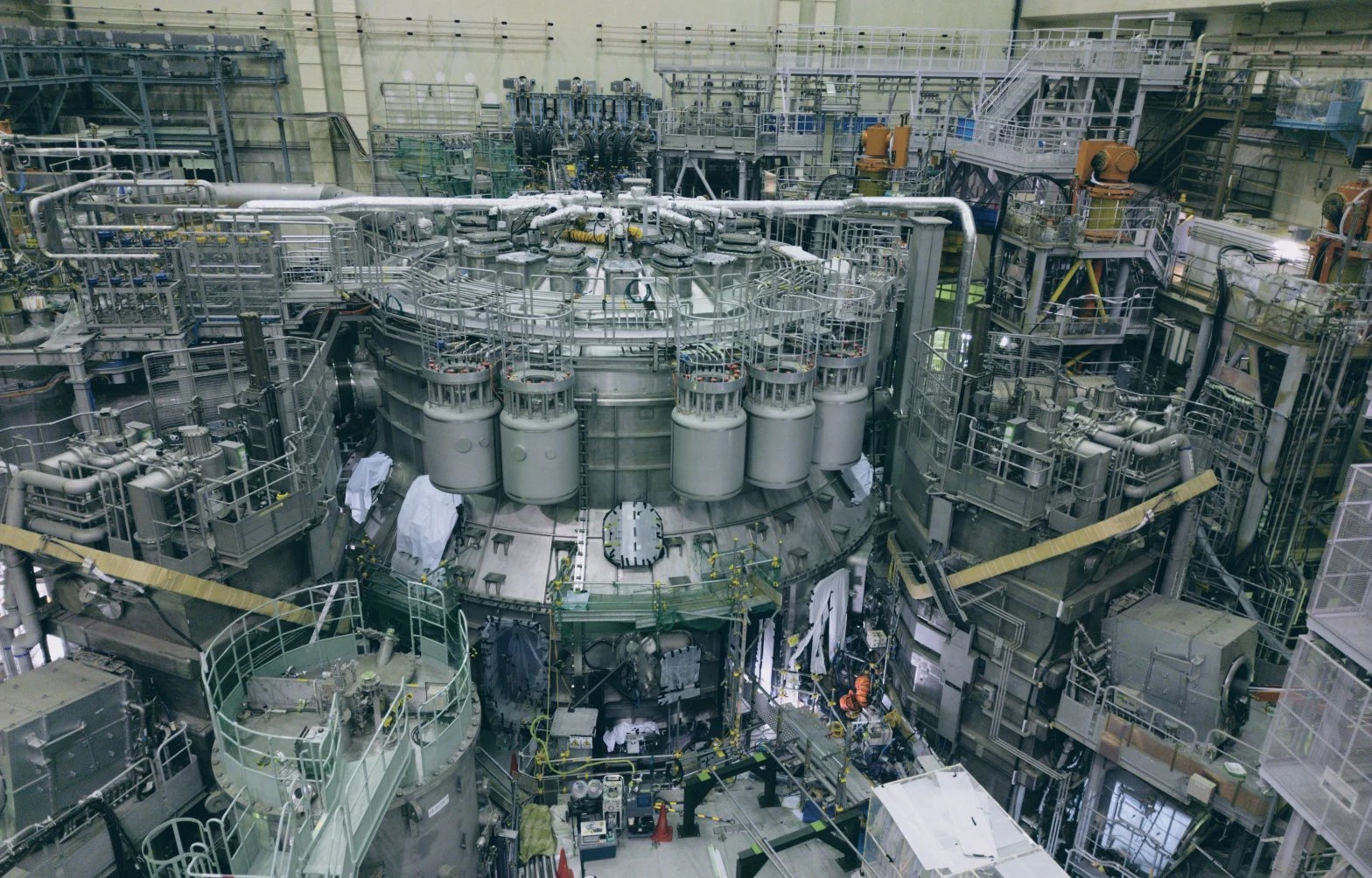
QST also serves as Japan’s Domestic Agency for ITER. In this context, “Domestic Agency” means the organization coordinating Japan’s agreed contributions to the international project, including equipment procurement and personnel cooperation. Work on magnets, heating, diagnostics and remote handling connects research requirements with manufacturing, quality assurance and international delivery. This is a different role from operating the ITER Organization itself. Japan’s ITER Domestic Agency
Turning experience into a power-generation system
At Rokkasho, demonstration-reactor design work brings together research and industrial expertise. QST’s Q-DEMO concept combines earlier Japanese DEMO studies with ITER engineering experience to pursue electricity-generation demonstration in the 2030s. Publication of a concept establishes a design proposal, not a completed or operating reactor. QST’s explanation of Q-DEMO
The government’s April 2026 implementation framework also addresses accelerated demonstration-reactor development and the organization needed to carry it forward. Cost and delivery arrangements remain important questions. A proposed joint implementation body involving QST and companies must not be described as established solely because a policy document discusses it. Implementation framework, in Japanese
For businesses, the distinction is practical. Supplying a test system, joining research and participating in a future electricity business entail different costs and responsibilities. A strategic priority is not itself an invitation to tender.
NIFS supports shared research and training
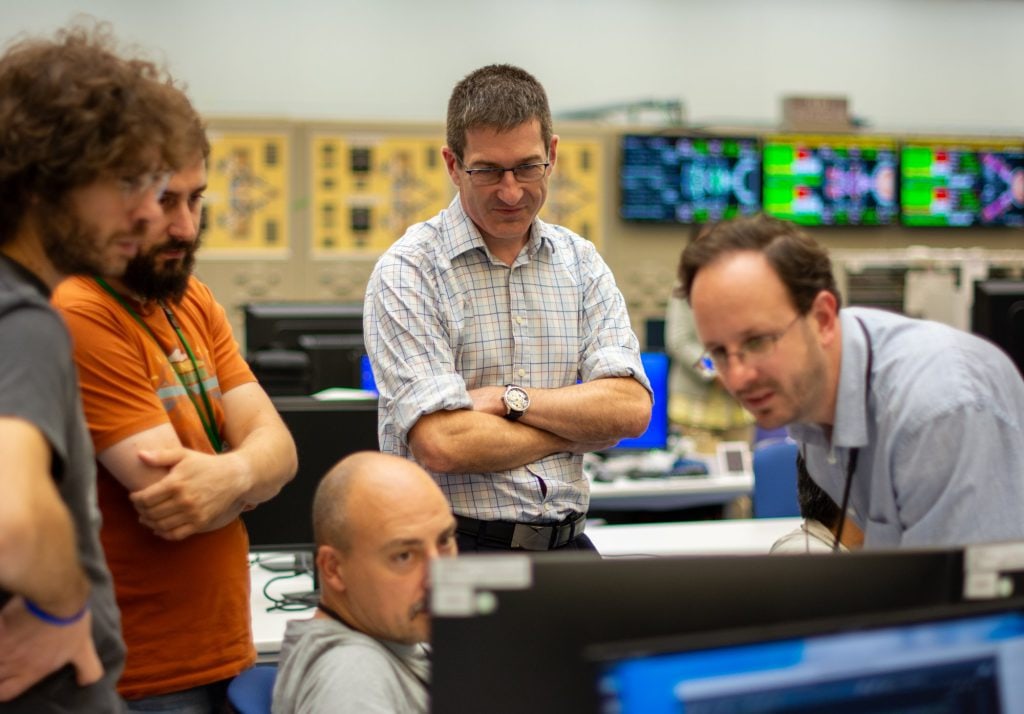
NIFS, in Toki, Gifu Prefecture, is an inter-university research institute within Japan’s National Institutes of Natural Sciences. Its remit extends beyond helical confinement to plasma physics, materials, computation and equipment engineering. Shared facilities and collaborative research provide ways for university and institutional teams to develop knowledge relevant to different reactor concepts. NIFS overview
The national strategy gives NIFS a central role in systematic training through university networks, working with institutions including QST and using experience from ITER and JT-60SA. QST’s reactor-development role and NIFS’s academic role therefore describe complementary responsibilities.
NIFS’s Large Helical Device completed its experimental program on 25 December 2025. Its accumulated data and expertise remain valuable, but a prospective collaborator should not assume that historical descriptions of LHD access constitute an offer of new experimental campaigns. LHD’s completion notice
Osaka’s ILE develops the laser route
ILE studies how intense laser pulses create the conditions needed for fusion, rather than relying on the magnetic confinement approach used by tokamaks. GEKKO XII is part of its experimental infrastructure. GEKKO XII facility information
Its Power Laser System Engineering group also investigates drivers for fusion applications and supporting technologies such as laser materials, mirrors and optical coatings. Those topics give photonics, materials and precision-control businesses identifiable research interfaces. They do not establish that particular products have been qualified or orders awarded. ILE’s laser-system research
Start with the test you need
Strengthening these hubs includes making research infrastructure useful to industry. An NIFS notice dated 27 April 2026 advertised a Cabinet Office briefing on facilities at the three hubs. That notice is a record of a past briefing, not a current registration opportunity. NIFS briefing notice
Our practical recommendation is to describe the test before choosing the institution: what component, under which thermal, vacuum, electrical or mechanical conditions, and with what evidence required afterward? For a heating-system part, dimensions alone may matter less than its interfaces with cooling, diagnostics and maintenance.
Then confirm the facility’s availability, relevant test envelope, fees, eligibility, intellectual-property arrangements and publication conditions. Overseas participants should verify these for the specific program rather than infer automatic access from an institution’s international mission. Japan’s research network offers several distinct entry points; matching the technical question to the right one is the useful first step.
Sources & verification
- Cabinet Office: Fusion Energy Innovation Strategy, revised June 2025 (Japanese)
- QST: Fusion research overview (Japanese)
- QST: The JT-60SA project (Japanese)
- QST: Japan’s ITER Domestic Agency (Japanese)
- QST: Introducing the Q-DEMO conceptual design (Japanese)
- Cabinet Office: Framework for implementing fusion energy (Japanese)
- NIFS: Institute overview (Japanese)
- ILE, The University of Osaka: GEKKO XII (Japanese)
- ILE: Power Laser System Engineering (Japanese)
- NIFS: Cabinet Office research-hub briefing notice (Japanese; past event)
Information verified: 2026-10-12
Independent English editorial adaptation reviewed on 18 October 2026. Historical events, published plans and achieved results are distinguished. Original Japanese publication date is preserved.
Saved to the same reader account as the Japanese edition. Sign-in and saved-item screens use a Japanese interface.